
- All
- Product Name
- Product Keyword
- Product Model
- Product Summary
- Product Description
- Multi Field Search
Views: 0 Author: Site Editor Publish Time: 2026-09-15 Origin: Site


Selecting the right packaging material directly impacts shelf-life extension, machine throughput, and overall packaging yield. You face high stakes on the production floor every day. Over-engineering your film thickness wastes valuable material budgets unnecessarily. Conversely, under-specifying barrier properties leads to rapid food spoilage and costly retailer rejections. Finding the exact balance requires deeply evaluating your specific application needs. This article provides a comprehensive technical framework for evaluating, shortlisting, and testing packaging materials. You will learn to match these materials directly to your product requirements and line capabilities. We will explore how barrier demands, optimal gauge calculations, and strict machinability constraints all intersect. By understanding these dynamics, you can optimize your material structures to maximize protection without compromising your operational efficiency.
Barrier Requirements Dictate Structure: Oxygen and moisture sensitivity should drive the choice between standard PA/PE and EVOH-based films.
Draw Depth Impacts Gauge: Film thickness must account for corner thinning during the thermoforming process to prevent micro-punctures.
Machinability Matters: The best theoretical film will fail if it doesn't align with your equipment’s heating capabilities, sealing jaws, and cycle speeds.
Compliance is Non-Negotiable: Total traceability and certified migration testing are required for all food-contact layers.
Before evaluating material samples, you must establish strict baseline parameters for success. Operating without clear targets leads to packaging failures or excessive spending. You need a data-driven approach to determine exact operational requirements.
The core function of any food package involves delaying degradation. You achieve this by controlling gas and moisture exchange. You must establish baseline acceptable Oxygen Transmission Rates (OTR) and Moisture Vapor Transmission Rates (MVTR).
Fresh proteins require vastly different OTR metrics compared to frozen vegetables. For highly sensitive products, you need barriers blocking nearly all oxygen ingress. For respiring products like fresh produce, you intentionally require higher transmission rates. Understanding your product's specific degradation triggers ensures you specify the exact barrier needed.
Physical protection during transit and retail display is equally critical. You must assess puncture resistance requirements based on the physical characteristics of the food.
Bone-in proteins: Require extreme puncture resistance to prevent sharp bones from piercing the package during vacuum sealing.
Boneless items: Allow for standard mechanical strength, focusing more on formability.
Heavy liquids: Demand high structural rigidity to maintain shape and prevent seal stress during handling.
You must also evaluate structural rigidity. A package holding heavy liquid sauces behaves differently than one holding lightweight dried snacks. The bottom web must maintain structural integrity after heating, stretching, and cooling.
Retail environments demand excellent visual presentation. Consumers judge food freshness directly through the packaging. You need to evaluate the necessity for various optical enhancements.
High gloss: Enhances the premium appearance of fresh meats and cheeses.
Low haze: Ensures maximum clarity so consumers can inspect the product.
Anti-fog coatings: Prevent condensation buildup inside packages containing moisture-rich foods.
Easy-peel seals: Provide critical convenience for ready-to-eat meals and snacks.
Operational efficiency dictates ultimate profitability. You must carefully balance film roll costs against actual machine speeds and reject rates. Cheaper materials often run slower or cause more frequent jams. This reduces your total packaging yield per shift. True packaging economics focus on maximizing the number of perfectly sealed, sellable units produced per hour.
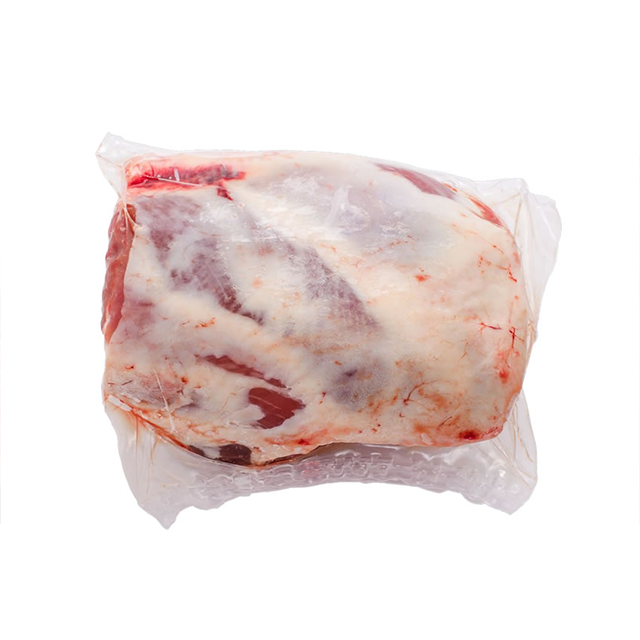
Modern packaging relies on highly engineered multilayer structures. Understanding the function of each layer helps you choose the most appropriate material.
Standard structures typically utilize a combination of Polyamide (PA) and Polyethylene (PE). PA, commonly known as Nylon, provides exceptional mechanical strength. It also offers excellent thermoformability, allowing the material to stretch deeply into molds without tearing. PE acts as the primary sealant layer. It melts easily to form hermetic seals while providing a strong moisture barrier.
These PA/PE blends are best for frozen foods and short-shelf-life goods. They work perfectly for applications where absolute oxygen exclusion is not the primary driver of shelf life. If you package frozen chicken or bulk cheese meant for rapid turnover, standard barrier structures provide optimal performance.
When extending shelf life for sensitive products becomes critical, you need advanced solutions. High barrier thermoforming film provides the ultimate defense against oxygen. These structures utilize multilayer co-extrusion technology. They specifically incorporate Ethylene Vinyl Alcohol (EVOH) layers. EVOH thermoforming film blocks oxygen far more effectively than standard nylon.
These advanced films are best for Modified Atmosphere Packaging (MAP), vacuum packaging, and highly perishable goods like fresh steaks or processed meats. However, you must evaluate them carefully. EVOH thickness must exactly match the required OTR. Over-specifying EVOH adds unnecessary material costs. You should work with suppliers to dial in the exact EVOH micron thickness your specific shelf life dictates.
Thermoforming requires two distinct material webs working in perfect harmony. They serve completely different physical functions during the packaging process.
The forming web acts as the bottom layer. It must be thicker and highly formable. Manufacturers typically use robust PE/PA/PE structures here. Heat softens this web, and vacuum pressure pulls it down to take the exact shape of the mold. The lidding web acts as the top layer. It remains unformed. Therefore, it is much thinner and dimensionally stable. It must perfectly match the bottom web’s barrier properties while containing an compatible sealant layer to ensure a flawless weld.
Thermoforming Film Structure Comparison
Feature | Standard Barrier (PA/PE) | High Barrier (EVOH) |
|---|---|---|
Core Components | Nylon (PA), Polyethylene (PE) | PA, PE, EVOH core layer |
Oxygen Barrier | Moderate | Extremely High |
Moisture Barrier | High | High |
Best Applications | Frozen foods, short shelf-life items | Fresh meats, MAP, vacuum packs |
Cost Profile | Economical | Premium |
Selecting the correct initial thickness determines both physical protection and material yield. Guessing this metric leads directly to leakers or wasted plastic.
Mold depth and shape dictate the starting gauge of your material. You cannot simply specify the final thickness you want. You must calculate the draw ratio to ensure adequate corner and sidewall thickness after forming.
Measure the total surface area of the unformed film spanning the mold opening.
Calculate the total interior surface area of the three-dimensional mold cavity.
Divide the cavity area by the unformed area to determine the draw ratio.
Multiply your required final minimum thickness by this ratio to find your necessary starting gauge.
This mathematical approach prevents under-specifying materials for deep-draw applications.
During the forming process, plastic stretches unevenly. It tends to thin out most drastically in the deepest corners of the mold cavity. You must identify these weak points in deep-draw cavities. If the material stretches too thin, you compromise both the oxygen barrier and puncture resistance. A microscopic puncture in a corner immediately ruins a vacuum seal. Understanding how your specific machine distributes plastic allows you to adjust plug assists or heating zones to mitigate this risk.
Modern engineering allows you to achieve more protection using less plastic. You should actively look for down-gauging opportunities. Advanced resin technologies allow you to reduce overall film thickness (measured in mil or microns) without sacrificing structural integrity. By transitioning from a standard 150-micron PA/PE web to a highly oriented 120-micron advanced structure, you lower freight weights and raw material costs. You also fit more linear meters on every roll, resulting in fewer roll changes and higher shift efficiency.
Every food category presents unique biochemical and physical challenges. You must tailor your packaging choices to these specific product realities.
Fresh and processed meats demand rigorous protection. Meat packaging film requires incredibly high puncture resistance, especially for bone-in cuts like ribs or T-bones. You must ensure excellent vacuum integrity to prevent oxidation and freezer burn. Furthermore, retail presentation is critical. You need integrated anti-fog properties. Meat naturally releases moisture. Without anti-fog agents, condensation builds up under the top web, obscuring the product from consumers.
Dairy products have highly specific respiration and barrier needs. For block cheeses, gas-flush (MAP) compatibility is essential. Some specialty cheeses actually need to "breathe" as they age. In these cases, you require specific permeability rates rather than total absolute barriers. However, for most processed dairy, reliable barrier retention against ambient oxygen is vital to prevent rapid mold growth. You must match the OTR precisely to the cheese type.
Convenience drives the ready-to-eat and bakery sectors. Here, the focus shifts heavily toward extreme optical clarity. Consumers want to see the exact meal they are buying. If the product requires heating, you must select microwave-safe resins capable of withstanding elevated temperatures without melting or leaching. Crucially, these packages demand easy-open, peelable seal layers. Consumers grow easily frustrated by packages requiring scissors. A clean, consistent peelable seal provides significant value.
A theoretically perfect barrier material remains useless if it will not run efficiently on your specific packaging equipment. Machinability dictates practical success.
Every plastic blend melts and stretches differently. You must match the film’s optimal softening point directly with your thermoformer's heating plates. A narrow temperature window causes processing headaches. If the material heats too quickly, it webs or sags, causing uneven draws. If it heats too slowly, it resists the mold, stressing the machine and creating thick rims with dangerously thin corners. Excellent Thermoforming Film offers a broad processing window, forgiving minor temperature fluctuations on the factory floor.
Multilayer structures often combine materials with different physical properties. Nylon absorbs ambient moisture, while polyethylene resists it. This asymmetry creates tension. Addressing tension and curling in asymmetric multilayer films is critical during unwinding and cutting. Severe curling causes the top and bottom webs to misalign during the sealing phase. You should discuss structural symmetry and moisture-resistant barrier layers with your supplier to prevent web tracking errors.
In high-speed food plants, the seal area rarely stays perfectly clean. You must evaluate the sealant layer’s ability to form a hermetic weld even when grease, blood, or liquid contaminants are present. Advanced ionomer resins or specialized metallocene sealants push contaminants out of the way during the heat-sealing process. They seal through biological liquids effectively. Ensuring seal integrity under messy conditions drastically reduces your leak rates and product recalls.
Safety and regulatory compliance represent strict non-negotiables in food manufacturing. You bear total responsibility for ensuring no harmful substances enter the food supply through your packaging.
You must rigorously verify that all supplied materials meet FDA, USDA, and EFSA standards for direct food contact. Using food grade thermoforming film is a baseline legal requirement. Your supplier must provide signed declarations of compliance stating the exact structural makeup adheres to regional safety frameworks.
Plastics can leach chemicals into food under certain conditions. You must request supplier documentation proving no harmful chemical transfer occurs. This migration testing must reflect your specific processing temperatures and the food's distinct fat and acid contents. Packaging used for highly acidic tomato sauces behaves differently than packaging holding frozen dry goods. Validated testing using specific simulants proves safety.
Quality variations between manufacturing lots cause sudden, unexplained line failures. Evaluating vendor certifications ensures consistent quality. You should demand BRC, SQF, or ISO certifications from your partners. These frameworks guarantee they maintain strict lot-to-lot consistency. Furthermore, robust traceability ensures rapid recall capabilities if a raw material defect ever arises.
The packaging industry is rapidly shifting toward circular economy models. You must navigate the transition toward recycle-ready, mono-material structures. Developing all-PE structures while maintaining necessary barrier performance presents a significant engineering challenge. You should actively discuss sustainable transition roadmaps with your suppliers, ensuring you meet upcoming environmental regulations without compromising food safety.
Choosing the optimal packaging material requires a rigorous, data-driven methodology. Start by defining your exact product shelf-life requirements to determine necessary barrier levels. Next, calculate the physical demands, including draw ratios and puncture resistance, to establish the proper gauge. Finally, validate these theoretical choices against your specific machine capabilities to ensure high-speed machinability.
Your immediate next step involves engaging suppliers directly. Request detailed specification sheets and material safety data sheets (MSDS) from your shortlisted vendors. Compare their technical parameters against your baseline requirements.
Always conduct a comprehensive line trial before making a final decision. Run a sample roll under normal production speeds to verify real-world machinability, corner thickness, and seal integrity through contamination. Never commit to volume purchasing without passing a rigorous internal line test.
A: Forming films are used on the bottom web. They are thicker, highly flexible, and stretch under heat to take the shape of the mold cavity. Non-forming films are used as the top lidding web. They are thinner, dimensionally stable, and designed to seal flat against the formed bottom web without stretching.
A: EVOH (Ethylene Vinyl Alcohol) provides an exceptional barrier against oxygen and other gases. It is incorporated into multilayer structures to significantly extend the shelf life of highly perishable foods like fresh meats and cheeses by preventing oxidation and spoilage.
A: You must calculate the draw ratio by dividing the total internal surface area of your mold by the surface area of the unformed film opening. Multiply your desired final corner thickness by this ratio to determine the starting gauge required to prevent micro-punctures.
A: Traditional multilayer films containing mixed plastics (like PA/PE) are difficult to recycle. However, the industry is rapidly transitioning toward recycle-ready, mono-material structures made entirely of polyethylene (all-PE), which can be processed in standard flexible plastic recycling streams.


