
- All
- Product Name
- Product Keyword
- Product Model
- Product Summary
- Product Description
- Multi Field Search
Views: 0 Author: Site Editor Publish Time: 2026-05-29 Origin: Site


End-of-line packaging bottlenecks often cripple growing manufacturing operations. Manual wrapping processes rapidly become massive liabilities. Production volumes scale upward daily. Human operators simply cannot keep pace. Upgrading your equipment demands a highly strategic calculation. You must carefully balance daily throughput demands against available floor space constraints. Variable product dimensions also complicate this procurement decision deeply. Choosing the wrong mechanism limits your maximum line velocity immediately. It introduces critical points of failure during peak seasonal shifts. We provide an evidence-backed comparison to guide your engineering strategy. You will explore the exact physical differences between L-Bar and side sealing architectures. We will show you how to align specific equipment classes to precise production thresholds. Facility managers can use this comprehensive breakdown effectively. You will select the exact machinery needed for your unique operational reality.
Mechanism: L-Bar sealers use a two-step, two-axis cut restricted by a fixed frame; side sealers utilize a continuous longitudinal cut, allowing for infinitely long products.
Volume Thresholds: Automatic L-Bar sealers max out at high-medium volume; a continuous motion sealer is required for high-speed, 24/7 uniform packaging.
Material Efficiency: Advanced side sealers with servo motors can reduce shrink film waste by up to 30% compared to traditional mechanisms.
Capital Expenditure: L-Bar machines offer a lower barrier to entry and smaller footprint; side sealing machines demand higher upfront capital and dedicated line integration but yield superior long-term ROI at scale.
We must first examine the physical architecture of these machines. The underlying engineering principles dictate their ultimate capabilities on your factory floor. Understanding these mechanics prevents costly line integration failures later.
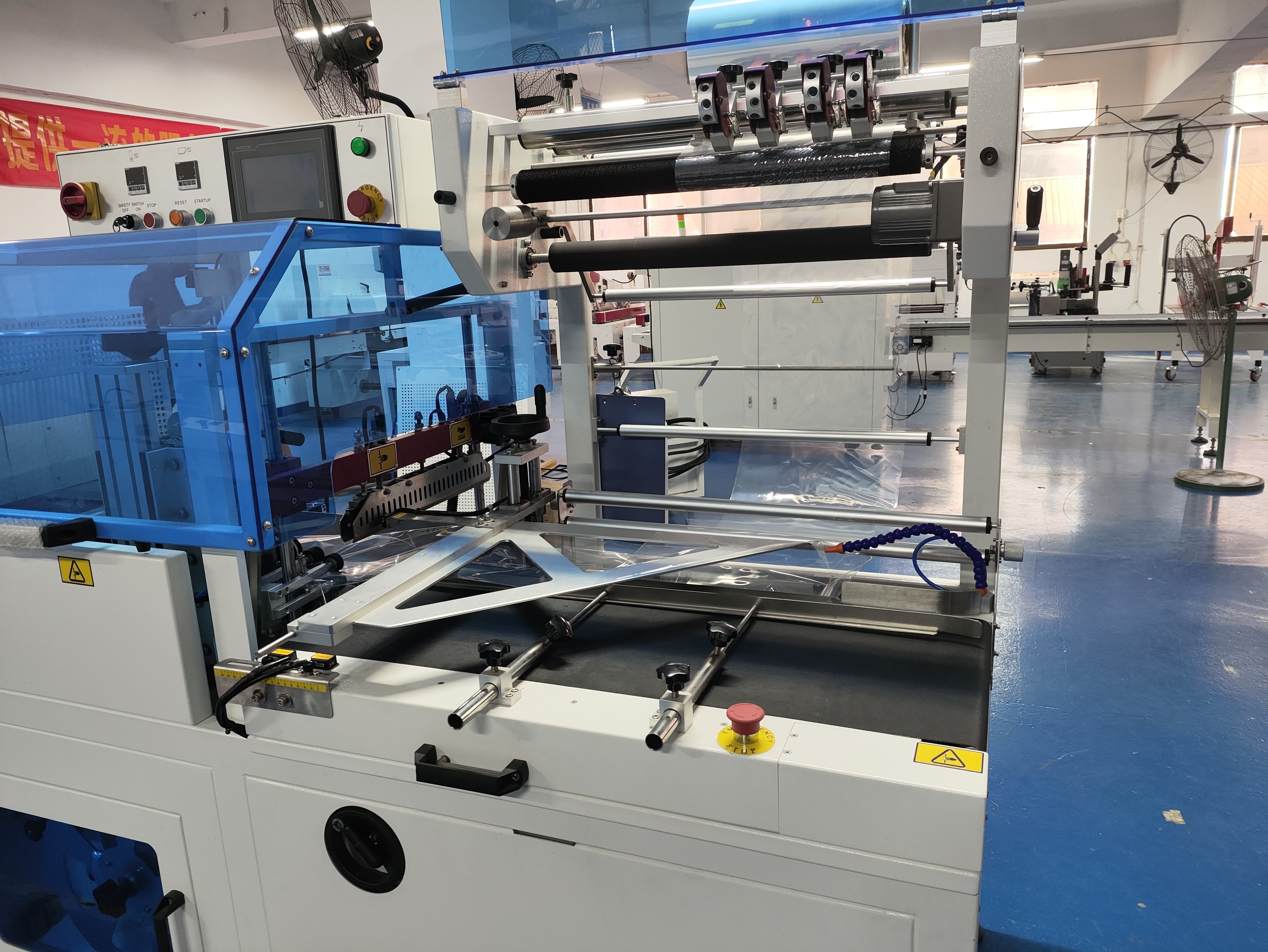
The L-shaped sealing bar cuts and seals film simultaneously. It uses either a precision micro-knife or a heated solid knife. A micro-knife requires routine Teflon tape replacement. A solid hot knife costs more initially but runs longer continuously. This contained sealing motion creates a firm physical limitation. The product must fit entirely inside the specific dimensions of the "L" frame. The sealing jaw descends upon the package physically. It seals the front margin and the side margin simultaneously.
This workflow constraint makes them ideal for standard boxes. They handle finite dimensions beautifully. You cannot process overly long items here. If your product exceeds the frame length, the machine simply cannot seal it. This rigid parameter requires operators to sort products carefully before packaging.
This system utilizes a completely different structural approach. It creates a continuous tube of film directly around the moving product. It seals the longitudinal side continuously. It then executes a rapid cross-seal at both ends of the package.
This immediate physical advantage proves massive for diverse manufacturers. It supports products of virtually infinite length seamlessly. You can easily wrap long lumber bundles. Rolled textiles and oversized automotive parts pass through without hesitation. The side sealing wheel runs continuously alongside the conveyor.
We must distinguish the two primary sub-types carefully. "Stop-and-seal" intermittent motion offers high flexibility at moderate speeds. The package pauses briefly on the belt for the cross-seal jaw to act. Conversely, a servo-driven continuous system runs entirely non-stop. The sealing jaw travels alongside the product dynamically. This synchronized movement achieves maximum possible speed without jolting delicate items.
Matching your machinery to your daily volume remains critical. Overbuying wastes engineering resources. Underbuying creates immediate factory bottlenecks during peak demand periods.
Manual and semi-automatic machines fit perfectly here. They often feature powerful magnetic hold-downs. These magnets assist operators by clamping the bar automatically. They hold the seal cycle closed for the precise required duration. However, they still require dedicated human pacing constantly. Operators manually insert products into the film separation. They then initiate the vertical cycle manually. This reliance on human ergonomics caps your daily output strictly.
You need an automatic L-Bar sealer for this middle tier. It entirely eliminates manual in-feed stations. Automated conveyors move products directly into the sealing area. Optical sensors detect the package edges precisely. However, it remains firmly capped by physical cycling limits. The L-bar must descend, seal, and retract fully. The next product cannot enter until this vertical cycle completes entirely.
A continuous motion sealer stands as the undisputed requirement here. It eliminates the physical "stop" from the seal cycle completely. Packages flow uninterrupted across the conveyor belts. This prevents bottlenecking during rapid e-commerce fulfillment operations. Fast-moving consumer packaged goods demand this uninterrupted velocity. The synchronized jaws match the exact belt speed flawlessly.
Efficiency goes far beyond mere mechanical speed. You must consider material usage and product changeover times carefully.
Intermittent side sealers excel in diverse contract packaging environments. Co-packers and e-commerce fulfillment centers love them intensely. Product sizes fluctuate wildly from minute to minute. The stop-and-seal approach handles these random lengths effortlessly. Optical sensors read the item length dynamically and adjust the cross-seal timing.
Conversely, automatic L-Bar systems work best for highly predictable runs. They dominate when processing identical SKUs uniformly. You set the parameters once via the interface. The machine churns out thousands of identical packages flawlessly.
Material cost control matters deeply to facility managers. L-Bars often generate more corner trim waste naturally. The fixed frame dimensions inherently leave larger film margins. You end up throwing away perfectly good polyolefin.
Modern side sealers utilize highly precise edge-sealing technologies. They incorporate dedicated selvage rewind systems to minimize excess scrap. The scrap wheel pulls the exact necessary tension continuously. Verifiable engineering metrics show a clear advantage here. Servo-driven continuous systems can reduce film usage by 20–30%.
Follow these best practices for material efficiency:
Audit your daily film consumption carefully before upgrading equipment.
Standardize your mixed batches slightly to optimize machine pacing.
Select the correct film gauge to prevent unnecessary tearing under tension.
Calibrate your selvage rewind tension daily for optimal continuous performance.
You cannot evaluate these packaging machines in a vacuum. They must integrate into your broader physical ecosystem seamlessly.
An L-Bar sealer usually requires a very compact footprint. Even paired next to a standard shrink tunnel, it fits easily. You can tuck them into tight facility corners. They serve extremely well in legacy buildings.
We contrast this directly against a continuous side sealing machine footprint. This system inherently requires longer in-feed and out-feed conveyors. It needs this extended physical runway to operate safely. The continuous speeds demand smoother acceleration zones. You must allocate significantly more linear floor space.
This specific mechanical choice dictates your operational success directly. Belt-driven in-feeds perform better for random items. They carry irregular shapes or unsupported multi-packs smoothly into the film. Chain-lugged in-feeds work ideally for rigid products. They maintain exact mechanical spacing perfectly.
Engineering Feature | Belt-Driven In-Feed | Chain-Lugged In-Feed |
|---|---|---|
Product Type Compatibility | Random, unsupported, unstable multi-packs | Rigid, uniform, single solid SKUs |
Spacing Control Method | Variable, relies strictly on optical sensors | Exact, mechanical physical spacing via lugs |
Operational Flexibility | High flexibility for rapidly changing sizes | Low flexibility, requires mechanical physical adjustment |
Maintenance Requirements | Frequent belt tracking and tensioning needed | Periodic heavy chain lubrication required |
We always warn buyers against isolating their purchase physically. A high-speed side sealer shrink wrap machine will overwhelm legacy equipment easily. It pushes packages too fast for old shrink tunnels. It can also flood your downstream palletizer rapidly.
Tunnels must have properly matched belt speeds. They need sufficient heating zone lengths to handle increased velocity. A fast package needs more intense heat instantly. Otherwise, the film leaves the tunnel loosely wrapped. You must upgrade the heat chamber if you upgrade the sealer.
You must evaluate implementation risk factors carefully before requesting formal quotes. Hardware capability means nothing without proper integration planning.
A proper shrink wrapping machine comparison looks beyond simple speed metrics. Think deeply about maintenance complexity. Side sealers utilize advanced servo motors. They feature continuous sealing belts and complex electronic sensors. They require highly skilled technicians for calibration and repair. Basic L-bars are generally easier to troubleshoot internally. Your existing mechanical maintenance team can usually handle them confidently without specialized digital training.
Procurement teams should prepare thoroughly before evaluating vendors. Use this precise engineering checklist to align your specifications.
Measure your absolute maximum and minimum product dimensions exactly. Record the length, width, and height.
Calculate your desired units per minute explicitly. Base this on peak seasonal demand, not average slower days.
Verify your available facility power routing. Specifically check for 220V/3-phase availability near the installation site.
Confirm your downstream equipment maximum speed. Ensure the heat tunnel can accept the proposed output velocity safely.
Assess your technical team accurately. Ensure they can handle servo motor diagnostics and touch-screen HMI troubleshooting.
Common mistakes plague this planning process. Buying a high-speed wrapper while keeping a slow tunnel fails constantly. This mismatch melts the film or jams the entire line. Always match throughput velocities perfectly across the entire packaging cell.
Your final decision matrix relies on clear operational priorities. If your primary constraint involves extreme length variability, act accordingly. Invest in a side sealer system immediately to eliminate length restrictions. If your product remains highly uniform and floor space is tight, pivot differently. An automatic L-Bar setup remains the most prudent physical choice. It provides exceptional reliability within defined physical parameters.
We urge readers to take immediate analytical steps today. Conduct a rigorous time-and-motion study of your current packaging line. Audit your existing film waste percentages thoroughly. Contact a specialized packaging engineer to perform an application-specific throughput analysis before signing any purchase orders.
A: Yes, they generally accommodate multiple standard materials, including POF, PVC, and PE. However, POF (Polyolefin) remains the undisputed industry standard for these machines. It provides clean, strong, and continuous side seals. PE works well for heavier bulk wrapping but requires specific heavy-duty sealing jaws.
A: An intermittent machine uses a "stop-and-seal" pacing method. The product pauses momentarily on the belt while the cross-sealing jaw closes. A continuous motion sealer uses synchronized, non-stop movement. The sealing jaw travels alongside the product dynamically, allowing for uninterrupted high-speed packaging without jolting.
A: It depends heavily on your specific product length. For standard small items, automatic L-Bars often pace very closely with intermittent machines. They cycle rapidly for short packages. However, both systems ultimately lose to continuous motion setups in extreme high-volume manufacturing environments.


