
- All
- Product Name
- Product Keyword
- Product Model
- Product Summary
- Product Description
- Multi Field Search
Views: 0 Author: Site Editor Publish Time: 2026-06-18 Origin: Site


Upgrading to high-speed shrink wrapping represents a major capital expenditure. You make this decision to eliminate packaging bottlenecks. You also want to reduce skyrocketing labor costs across your facility. Transitioning from manual or semi-automatic systems to fully automated packaging lines brings fresh variables. Suddenly, you must navigate strict footprint constraints on the factory floor. Film compatibility becomes a critical daily concern. You also face new mechanical integration complexities when linking upstream and downstream equipment. Selecting the right equipment demands a broader perspective. You must look far past simple maximum speed ratings. Facilities find more success by evaluating changeover flexibility and continuous motion reliability instead. In this guide, we explore core engineering principles. We unpack film handling mechanics and essential vendor support requirements. You will learn exactly what to analyze before finalizing your purchase. A fully optimized high speed shrink wrap packing machine transforms your entire output capacity.
Speed vs. Throughput: Rated machine speed rarely equals operational throughput; evaluate based on sustainable packages per minute (PPM) including changeovers.
Sealing Technology Matters: Continuous side sealing offers greater flexibility for varying product lengths compared to traditional L-bar sealers.
System Integration: A standalone machine is insufficient; seamless integration between the wrapper and the shrink wrap tunnel dictates final pack quality.
Material Efficiency: Optimizing for Polyolefin (POF) films can drastically reduce scrap rates and lower per-unit packaging costs.
Before exploring new equipment, you must define your exact production constraints. Many plant managers assume raw machine speed fixes everything. Reality often proves otherwise. You need to identify the root cause of your packaging delays. Determine whether the bottleneck stems from labor availability, inconsistent seal quality, or genuinely slow throughput.
We see a common trap during equipment procurement. Buyers confuse "maximum mechanical speed" with realistic operational speed. A vendor might advertise a machine at 150 packages per minute (PPM). However, your actual throughput depends heavily on upstream product feeding. It also relies on efficient film splicing and operator capability. If your operators take ten minutes to thread new film, your hourly output plummets. You must calculate your sustainable PPM.
You also need to determine your required level of automation escalation. Standalone units work for isolated packaging cells. However, high-volume operations demand more integration. You must decide if you need a modular automatic shrink wrap machine or a system integrated directly into an upstream manufacturing line. This integration typically happens via indexing conveyors. Indexing conveyors space products perfectly before they enter the wrapping zone.
Operational Baseline Assessment Chart | ||
Constraint Variable | Symptom | Required Action Before Purchase |
|---|---|---|
Infeed Inconsistency | Products bunching up before the wrapper | Evaluate indexing conveyors and smart spacing sensors. |
Splicing Downtime | Frequent long stops for film roll changes | Specify dual-roll arbors and auto-splicing features. |
Seal Failures | High scrap rates due to broken film seals | Audit current film gauge and transition to continuous motion sealing. |
The mechanical heart of any shrink wrapping system lies in its sealing technology. Getting this right dictates your final package quality.
You generally choose between intermittent and continuous motion sealing. Intermittent systems stop the product momentarily to make the cross seal. This start-and-stop action limits maximum throughput. It also increases wear and tear on drive belts. Continuous motion prevents product stopping altogether. The sealing head travels alongside the moving product. This fluid motion maximizes throughput and drastically reduces mechanical stress.
Facilities handling diverse product catalogs benefit greatly from evaluating a side sealing shrink wrap machine. Traditional L-bar sealers restrict product length based on the physical dimensions of the L-bar. Side sealers operate differently. They apply a continuous seal along the side of the package. This design makes them ideal for facilities handling products of infinite length or constantly varying sizes. You gain immense flexibility without purchasing separate machinery for different product lines.
The wrapper only completes half the job. You must evaluate the shrink wrap tunnel as a deeply integrated component. Heat transfer and airflow management dictate the final aesthetic. Look for tunnels featuring dual-zone heating and variable airflow control. Dual zones allow you to blast heat initially and taper it off. This precise control prevents film burn. It also eliminates unsightly "dog ears" on the corners of your packages.
Conveyor synchronization remains a vital integration point. The wrapper’s discharge conveyor must perfectly sync with the tunnel’s intake conveyor. Even a fractional speed mismatch causes products to bunch together or pull apart aggressively. This ruins the film tension before it shrinks.
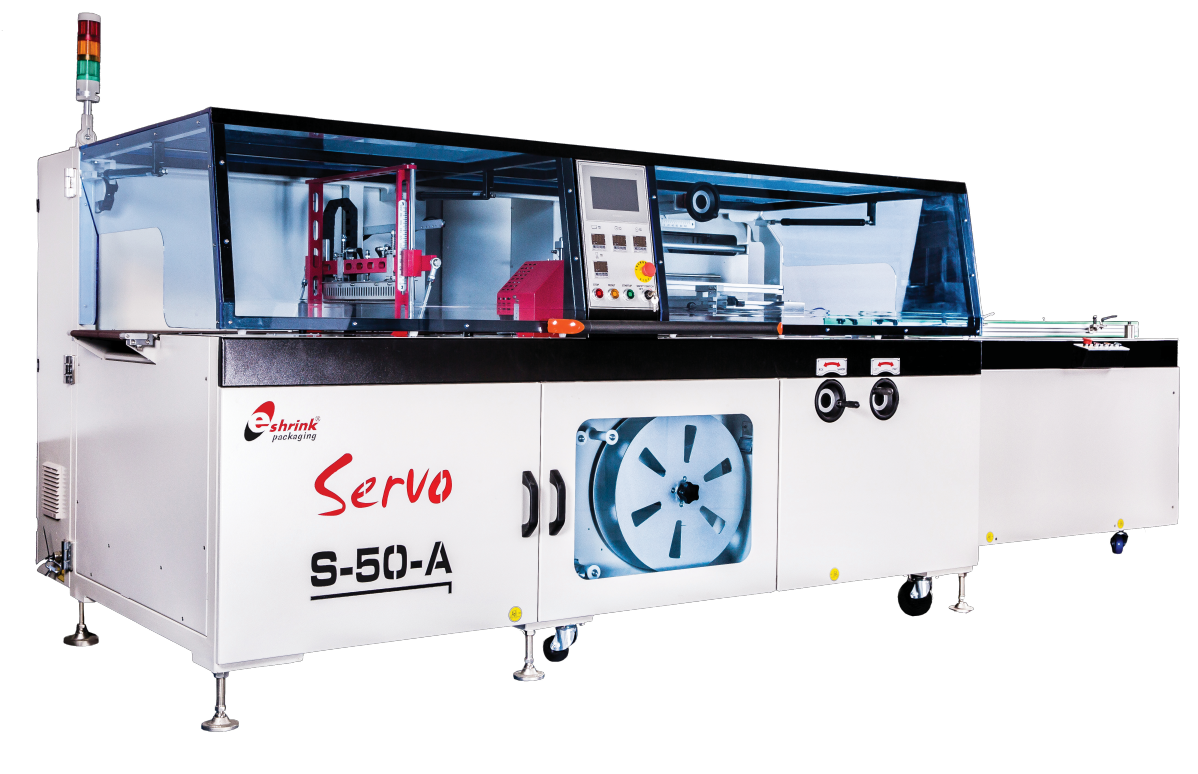
Even the most advanced mechanical system fails if it mishandles your chosen packaging material. High-speed automation requires exacting material control.
Ensure the equipment effectively runs industry-standard films. Different films demand different mechanical handling. Polyethylene (PE) is thick and requires robust cutting blades. Conversely, a dedicated POF shrink packing machine needs highly sensitive tension controls. Polyolefin (POF) film is thin, highly transparent, and prone to stretching if pulled too hard. Your machine must offer precise electronic tensioning to handle POF smoothly at high velocities.
Waste management presents another critical challenge. You must look for automated scrap recovery systems. High-speed operations generate continuous trim strips. Without proper management, this trim tangles in the rollers. Quality machines feature automated scrap take-up wheels equipped with tension sensors. These sensors detect exactly how tight the waste strip is. They adjust rotation speed automatically to prevent film snaps and minimize overall waste.
Finally, assess splicing efficiency. You need to know how quickly an operator can load a new roll of film. Every minute spent changing a roll halts your entire production line. High-volume environments require dual-roll arbors. Auto-splicing features join the end of the old roll to the start of the new one automatically. This drastically reduces downtime during your busiest shifts.
Translating a machine spec sheet into a real-world factory installation exposes several practical challenges. Physical space and daily usability dictate long-term success.
Floor space constraints often surprise facility managers. High-speed systems require much longer infeed conveyors than slower units. Products need more physical distance to space out correctly at high velocities. Extended tunnels also add significant length to the line. You must verify physical layout dimensions meticulously before shortlisting any vendor.
You also need to test the Human-Machine Interface (HMI) for recipe management. Production schedules change constantly. Ask yourself: how quickly can an operator switch the machine from a 4-inch product to a 12-inch product?
Consider these changeover features:
Tool-less adjustments: Operators should move guide rails and belts using simple hand cranks, not wrenches.
Recipe memory: The HMI must store specific speed, temperature, and tension settings for different SKUs.
Automated positioning: Premium machines use servo motors to adjust conveyor widths automatically based on the HMI recipe.
Component accessibility remains just as important. Evaluate the machine design for ease of maintenance. When a belt snaps or a blade dulls, your technicians need fast access. Wear parts like cutting blades, seal pads, and drive belts must be easily accessible. You should never have to dismantle the main chassis to replace a simple wear component.
Purchasing complex packaging equipment requires a strict evaluation of the manufacturer. You are buying a long-term operational relationship.
Your analysis must factor in daily operational efficiency. You should project expected film waste percentages. You must also calculate the energy consumption of the entire line. The shrink tunnel typically consumes the most electricity. Modern, well-insulated tunnels minimize heat loss and lower your utility bills. Additionally, review the preventative maintenance schedules. High-speed equipment requires regular lubrication and component inspections to maintain peak performance.
A true high speed shrink wrapper functions as a critical path asset. If it stops, your outbound shipping stops. You must assess the vendor's domestic parts inventory. Do they stock critical servo motors locally? Review their technical support hours and carefully read their Service Level Agreements (SLAs).
Never authorize shipment without conducting a rigorous Factory Acceptance Testing (FAT) protocol. The vendor must test the equipment using your actual products. They must use your preferred film materials. This testing verifies seal integrity and ensures the machine hits your target speeds continuously.
The right high-speed machinery perfectly balances raw throughput with operational flexibility. It maximizes material efficiency while relying on robust vendor support. Transitioning to an automated wrapping line removes labor bottlenecks and stabilizes your packaging quality. However, you must prioritize continuous motion technology and seamless tunnel integration over mere speed claims.
Your next steps require precise data gathering. Document your exact product dimensions, both minimum and maximum. Calculate your required sustainable PPM based on your daily shipping targets. Document your current film specifications. Use this specific data to create a rigid vendor evaluation matrix. Finally, demand physical sample testing on your exact products before you request any final quotes. This proactive approach guarantees your new equipment performs exactly as promised.
A: High-speed shrink wrapping typically ranges from 75 to over 150 packages per minute (PPM). However, actual speed depends heavily on your product dimensions and film type. Smaller, rigid products run much faster. Complex shapes or delicate Polyolefin (POF) films may require slightly reduced speeds to maintain flawless seal integrity.
A: Yes. Side sealing models excel at handling infinite product lengths. Advanced machines come equipped with programmable HMIs and automated infeed adjustments. Operators simply select a saved product recipe on the screen. The machine then automatically adjusts guide rails and tensioners, enabling rapid changeovers between vastly different product sizes.
A: Polyolefin (POF) offers exceptional tensile strength and high clarity. Unlike older PVC films, POF does not emit toxic fumes or leave carbon deposits on sealing blades during the heating process. This clean operation prevents blade fouling at high speeds. It makes POF ideal for food packaging and consumer goods.


