
- All
- Product Name
- Product Keyword
- Product Model
- Product Summary
- Product Description
- Multi Field Search
Views: 0 Author: Site Editor Publish Time: 2026-06-04 Origin: Site


For packaging lines transitioning from semi-manual to automated processes, upgrading equipment requires precision. The right machinery dictates your end-product quality. It also determines your true throughput capability. Poor temperature control ruins packaging. Mismatched conveyor systems lead to severe film distortion. You will face product damage and excessive material waste. A heating system is never a simple plug-and-play asset. Proper selection requires balancing complex thermodynamics. You must consider varying film chemistry. Your unique facility infrastructure plays a massive role. Choosing blindly often results in frequent bottlenecks and workflow disruptions. This guide breaks down essential technical evaluation criteria. We explore daily implementation realities to guide your decisions. You will discover how different heating methods interact with specific materials. Finally, we help you confidently shortlist the exact equipment needed to achieve your production goals.
Heating Technologies Must Match Application: Convection (hot air) offers versatility for POF/PVC, steam provides precision for complex curves, and infrared excels with dark-colored tamper bands.
Belt Material Dictates Film Compatibility: Polyethylene (PE) films require Teflon or fiberglass belts to prevent sticking, whereas standard wire mesh suits Polyolefin (POF).
Airflow Plumbing is Critical: Effective shrink wrapping relies on controlled "ballooning" of the film; poor internal baffling leads to cold spots and wrinkles.
Budget Realistically for Automation: While entry-level industrial tunnels range from $10,000 to $50,000, continuous motion systems handling 100+ units per minute represent a six-figure capital expenditure.
Selecting the correct heating medium defines your packaging success. You must match the physical properties of the tunnel to your specific product requirements. Manufacturers typically choose between convection, steam, or radiant energy. Each method offers distinct advantages and unique operational constraints.
A heat circulation shrink tunnel relies on moving air. The system uses high-velocity fans. Adjustable baffles direct recirculated hot air around the product. This creates a highly controlled environment. It represents the most common technology found in modern facilities.
These systems excel at wrapping standard multi-pack items. They handle frozen foods exceptionally well. Directional airflow protects heat-sensitive contents from premature thawing. They easily process standard PVC POF film packaging. Hot air models are highly versatile. They require no specialized facility plumbing. However, they sometimes struggle to wrap highly contoured containers evenly.
Steam technology relies on moisture and direct heat transfer. The machine immerses the product in live steam. This creates a uniform, 360-degree heat transfer effect. Steam hugs every contour perfectly.
You should use steam for full-body shrink sleeves. It handles complex bottle geometries effortlessly. It works safely around highly flammable products possessing a low flash point. Steam is ideal for high-pressure containers. It yields flawless graphic registration. You will rarely see wrinkles. However, steam requires robust facility infrastructure. You need commercial boilers and proper drainage. Localized moisture management becomes essential.
Infrared systems apply heat differently. The machine uses quartz panels. Some models use calrod-style heating elements. These components emit intense radiant energy directly onto the film. They do not rely on moving air.
IR technology targets specific areas. It works best for tamper-evident neckbands. Dark-colored materials absorb IR energy rapidly. This makes IR highly efficient for specific sleeve applications. Facilities often use IR as a pre-shrink zone. They place it just before a standard convection chamber.
Heating Technology | Best Application | Primary Advantage | Main Limitation |
|---|---|---|---|
Convection (Hot Air) | Multi-packs, frozen goods, flat boxes | Highly versatile, easy setup | Struggles on complex curves |
Steam | Contoured bottles, shrink sleeves | Flawless 360-degree graphics | Requires boilers and drainage |
Radiant (Infrared) | Dark tamper bands, neck seals | Targeted rapid heating | Not suitable for full-body clear film |
Understanding the physics behind shrinking prevents daily headaches. You must look beyond simple temperature dials. A high-quality shrink wrapping tunnel manages airflow dynamically. Operators must balance transit speed against core heat penetration.
Proper shrink wrapping requires a specific fluid dynamic. The film must briefly "balloon" or "pillow" off the product. It detaches slightly before collapsing evenly. This expansion allows air to escape properly. The film then shrinks tightly without creasing.
Advanced systems use complex internal plumbing. Carefully placed baffles create necessary air turbulence. Poor internal airflow prevents this pillowing effect. The film collapses prematurely. This creates ugly cold spots and sharp wrinkles. Operators often call these defects "dog ears".
Modern equipment relies on staggered temperature zones. You cannot blast a plastic container using maximum heat immediately. Sudden extreme heat causes structural distortion. Thin-walled plastic bottles will warp or melt.
Advanced machines utilize a gentle pre-heat zone. The first chamber might hold 80–90°C. The product absorbs this ambient warmth safely. A sub-second high-heat exposure follows immediately. The film shrinks instantly. The container remains completely intact. This precise zone control separates premium machines from budget alternatives.
You must calibrate conveyor speed to product mass. Light bakery goods require rapid transit. Prolonged heat damages the delicate food inside. They need high temperatures for very short durations.
Dense items require a completely different approach. Heavy metal parts or wood panels absorb heat quickly. They pull heat away from the film. These products require much slower speeds. You must allow core heat penetration. The film needs a longer dwell time to shrink properly. If you run dense items too fast, the film barely reacts.
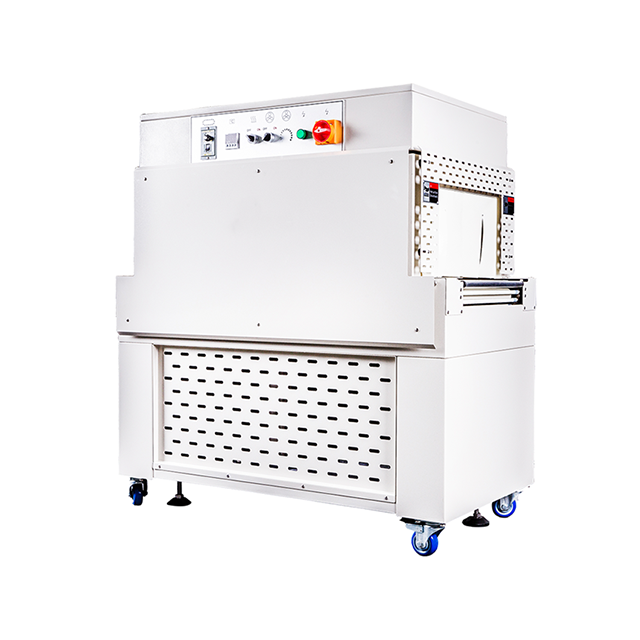
Your conveyor belt choice impacts daily operations heavily. Mismatched belts cause melted film and severe machine jams. You must evaluate chemical compatibility before purchasing a shrink tunnel machine.
Different plastics react uniquely when heated against metal. Ignoring these chemical properties creates immediate operational failures.
Polyolefin (POF) & PVC: These materials perform reliably across most surfaces. They remain generally compatible using standard stainless steel. Metal wire mesh belts handle them perfectly.
Polyethylene (PE): This material presents massive challenges. PE is highly prone to melting. It aggressively adheres to bare metal surfaces. You must pair PE films using Teflon-coated belts. Fiberglass mesh also prevents this dangerous sticking.
The physical shape of your belt matters. Product footprint dictates your conveyor style. A tiny error here causes daily line stoppages.
Wire Mesh: This represents the industry standard. It proves highly durable. It resists warping under extreme heat.
Silicone-Coated Dead Rollers: These rollers excel at achieving clean bottom-shrink aesthetics. The product glides smoothly. However, they require frequent high-temperature grease maintenance.
Belt Gaps vs. Micro-Products: Automation engineers often overlook gap sizing. Tiny products easily fall through standard roller gaps. An item measuring 1x1x2 inches will drop between standard rollers. This causes severe internal jams. Such micro-applications require specialized tight-mesh designs. Solid modular belts solve this problem completely.
Nylon Wire Mesh: This material dominates the steam tunnel sector. Nylon resists rust naturally. It offers excellent mold-resistant properties. It survives constant moisture exposure easily.
Operating an industrial heating chamber demands regular oversight. You must plan for ongoing maintenance tasks. Efficiency protocols reduce daily energy waste. A reliable heat shrink tunnel requires proactive care to avoid sudden breakdowns.
Modern heating chambers prioritize energy retention. Older models vent hot air into the facility constantly. This forces air conditioning systems to work harder. It creates an uncomfortable environment for workers.
Contemporary models utilize energy regeneration loops. Closed-loop air recirculation captures escaping heat. The system forces warm air back into the main chamber. This reduces overall power consumption drastically. It keeps the surrounding packaging floor noticeably cooler. Investing in superior insulation panels also prevents ambient heat bleed.
Different technologies carry distinct maintenance burdens. You must align your facility capabilities to the machine type.
Steam tunnels demand rigorous upkeep. You must perform regular boiler descaling. Hard water buildup destroys steam injectors quickly. Some local municipal codes require certified boiler operators on staff. This adds significant labor responsibilities. You also need comprehensive drainage sanitation plans.
Convection tunnels require minimal specialized infrastructure. Your maintenance team primarily performs routine mechanical checks. They must inspect heating elements monthly. Fan motors require occasional lubrication. Belt tensioners need minor adjustments periodically. The absence of water makes convection systems far easier to maintain.
Selecting heat shrink packaging equipment requires a structured approach. Use this actionable framework during your evaluation stage. Missing one detail can derail your entire automation project.
Aperture & Chamber Dimensions: Ensure the tunnel opening accommodates your largest product safely. Provide adequate clearance for proper airflow. Do not buy an oversized tunnel unnecessarily. Excessive empty space allows heat to escape inefficiently. Choose between single or dual-chamber designs based on your target line speed.
Electrical Requirements: Verify your facility power capabilities thoroughly. Check your available phase, hertz, and amperage capacities. Do this before purchasing heavy-duty electric models. Upgrading facility power later causes massive delays.
Upstream/Downstream Integration: Your new equipment must communicate with existing machinery. Ensure the programmable logic controller (PLC) syncs seamlessly. Variable frequency drives (VFD) must match upstream speeds. The tunnel must integrate flawlessly alongside existing L-bar sealers or continuous motion baggers.
Material Testing Availability: Never buy a machine blindly. Reputable original equipment manufacturers (OEMs) offer testing services. Send them your specific product and film. They will run it through a test tunnel. This guarantees the final aesthetic results before you sign the purchase order.
Upgrading to an industrial heat circulation system represents a major automation milestone. You must align your chosen heating medium directly with your specific film type. Evaluate your product footprint carefully before selecting a conveyor belt style. Prepare your maintenance team for the daily realities of running high-temperature equipment.
Before issuing any request for quote (RFQ), map out your current line bottlenecks. Document your facility electrical specifications accurately. Always request a live film-shrink video test from prospective manufacturers. These practical steps ensure you deploy a reliable, highly efficient packaging line.
A: Polyolefin (POF) remains the most versatile option for hot air convection. It offers high tensile strength and exceptionally clear optics. PVC is also highly common but requires adequate facility ventilation. If you choose PE film, you must install specialized non-stick conveyor belts to prevent melting.
A: Wrinkles and cold spots typically indicate poor internal airflow. The film fails to "balloon" sufficiently. A tunnel temperature set too low also causes this. Additionally, running the conveyor speed too fast prevents adequate dwell time. The film simply cannot absorb enough heat to shrink evenly.
A: Yes. Many manufacturers now offer "self-contained" steam tunnels. These specialized units feature integrated steam generators built directly into the frame. They serve perfectly for facilities lacking existing central steam plumbing. You gain the precision of steam shrinking without massive infrastructure overhauls.


