
- All
- Product Name
- Product Keyword
- Product Model
- Product Summary
- Product Description
- Multi Field Search
Views: 0 Author: Site Editor Publish Time: 2026-10-04 Origin: Site


Saving pennies on cheap plastic leads to severe consequences like freezer burn, compromised food safety, and unsellable inventory. You might think basic wrapping suffices, but modern operations demand far more. Transitioning from basic farm processing to commercial-grade retail readiness changes everything. The stakes rise significantly once you start scaling your production and moving birds into competitive retail spaces. Shoppers demand pristine, leak-proof products. Selecting the right materials requires moving beyond basic dimensions. You must evaluate puncture resistance, barrier properties, and overall operational efficiency. In this comprehensive guide, we will explore the critical features of high-performance packaging. You will learn how to identify durable materials, assess oxygen barriers, and match bag sizes to your specific birds. Ultimately, we equip you with the exact knowledge needed to secure your product, reduce waste, and build lasting customer trust.
High-quality shrink bags must balance a high shrink rate (typically 40-50%) with puncture resistance to accommodate bone protrusions.
Material compliance is non-negotiable; commercial operations must verify they are using a certified food grade shrink bag.
High-barrier EVOH films are essential for long-term frozen storage to prevent oxygen ingress and freezer burn.
Operational design features (e.g., curved bottoms, proper sizing) directly impact processing speed and labor costs.
Compromised packaging creates severe financial setbacks during a processing batch. When standard bags fail, the entire batch risks spoilage and retail rejection. Processors often underestimate how quickly cheap materials destroy profit margins. One small tear ruins an entire bird. If your distribution carton contains leaking packages, grocery buyers will reject the whole shipment. This cascading effect turns a minor material saving into a major financial disaster.
Sharp wing and leg bones easily breach thin, non-optimized films. Anatomy presents a unique challenge during processing. Hock joints and wingtips act like needles against fragile plastics. These microscopic tears invite bacterial exposure immediately. Pathogens quickly ruin the meat, creating dangerous food safety issues. Spoilage organisms thrive in these compromised environments, leading to off-odors and slime formation. Protecting your inventory requires a robust defense against physical punctures.
Another massive risk involves the freezer burn factor. Poor oxygen barriers degrade meat texture and color rapidly. Freezer burn occurs when moisture sublimates away from the meat surface. This leaves behind dry, leathery patches. Customers spot grayish, ice-covered meat and immediately lose trust. This visual degradation destroys your retail value almost overnight. Shoppers buy with their eyes first. A frosty, discolored bird will sit in the freezer section indefinitely.
You must also consider operational bottlenecks on the processing floor. Flimsy materials lead to frequent seal failures or inconsistent shrinking. Workers end up double-bagging or reprocessing birds continuously. This repetitive rework drives up labor hours and slows down your entire line. Using a robust poultry packaging bag eliminates these repetitive failures. High-quality materials keep your operations moving efficiently while protecting the final product.
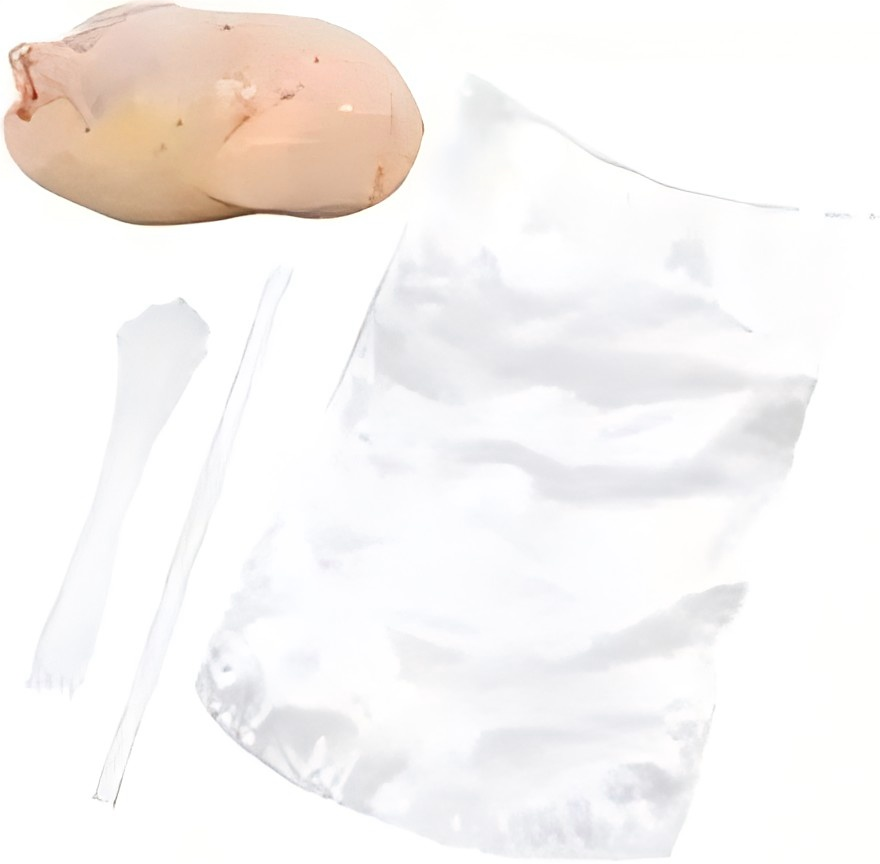
Evaluating quality starts by looking closely at material thickness. Standard chickens usually require a thickness of 2 to 2.5 mil. Turkeys demand even thicker materials due to heavier weights and larger bones. This thickness ensures durability without sacrificing the essential shrink effect. If you select films thinner than 2 mil, blowout rates in the dip tank skyrocket. Heavy-duty plastic acts as a shield against processing rough handling.
Next, examine the shrink rate and conformity. An ideal shrink ratio sits between 40% and 50%. A good bag molds tightly to the bird's contours. It should handle standard dip-tank temperatures (typically 185°F - 195°F). You do not want materials melting or tearing during this hot water bath. High-quality Poultry Shrink Bags deliver a pristine, glass-like finish every time. This tight conformity prevents blood from pooling in empty corners, improving visual appeal.
Regulatory compliance remains equally critical. You must source verifiable, BPA-free, FDA-approved materials. Skeptical buyers should always ask suppliers for compliance spec sheets. Verifying you use a legitimate food grade shrink bag prevents harmful chemical leaching. Food safety audits require clear paper trails proving material compliance.
Always request specification sheets detailing FDA or equivalent food safety approvals.
Test a small sample batch in your actual dip tank before committing to bulk orders.
Inspect the bag seams closely for uniform heat welding.
Avoid films thinner than 2 mil for whole birds to prevent bone punctures.
Check for clarity; high-quality resins should remain perfectly transparent after shrinking.
Let us take a technical deep dive into material science. Standard polyethylene bags offer basic protection but lack true barrier properties. They wrap the bird but do little to control internal atmospheres. Multi-layer co-extruded barrier bags provide a vastly superior solution. They combine multiple distinct polymer resins. Each resin layer performs a specific protective function, from puncture resistance to gas blocking.
Oxygen and moisture control dictate the shelf life of your meat. EVOH (Ethylene Vinyl Alcohol) layers act as an impenetrable fortress. They block oxygen transmission effectively, sealing in freshness. This extends the shelf life for frozen poultry significantly. Low Oxygen Transmission Rates (OTR) keep the meat looking freshly processed for months. Without EVOH, oxygen slowly penetrates the plastic, oxidizing fats and ruining flavor.
You must match the film to your specific supply chain. Let us contrast high-barrier needs for freezing against breathable needs for fresh applications. Frozen products require high-barrier EVOH bags to stop freezer burn dead in its tracks. Conversely, certain fresh poultry applications need breathable films. Breathable options allow harmless natural gases to escape. This prevents foul, sulfur-like odors upon opening a fresh package. Always align the barrier type to your exact distribution method.
Material Type | Primary Feature | Oxygen Transmission (OTR) | Best Use Case | Shelf Life Expectancy |
|---|---|---|---|---|
Standard PE | Basic protection, low cost | High (Breathable) | Short-term fresh retail | Days to weeks |
Multi-layer Co-extruded | Enhanced durability | Medium | Short-term freezing | 1 - 3 months |
EVOH High-Barrier | Maximum oxygen block | Very Low | Long-term deep freezing | 6 - 12+ months |
Structural design heavily influences processing floor efficiency. The curved bottom advantage offers a prime example. Round-bottom bags are vastly superior to standard square-bottom bags. Square bags create unwanted "dog ears" in the corners. These corners trap contaminated water and excess air during the shrinking process. Round bottoms eliminate this issue entirely. They improve both the final presentation and overall product hygiene.
Proper sizing ensures operational smoothness. You need a reliable sizing matrix to match bag dimensions to bird weights. Using a 10x16 chicken shrink bag works perfectly for standard broilers and roasters under 7 lbs. If the bag is too large, it creates messy wrinkles. If the bag is too small, you risk tearing it during insertion.
Closure mechanisms also play a vital role in processing speed. You must evaluate sealing methods carefully. Zip ties work well for small batches but require intense manual labor. Heat sealing provides a professional finish but needs perfectly clean bag necks. Clip rings offer unmatched speed and security for mid-to-large operations. You must observe how the bag's neck material responds to each method.
Broilers (2-4 lbs): Use 8x12 or 10x16 bags for a snug fit.
Roasters (5-7 lbs): Stick to 10x16 bags for an optimal, wrinkle-free finish.
Hens/Large Roasters (7-10 lbs): Upgrade to 12x20 bags to accommodate wider breasts.
Turkeys (10-14 lbs): Require at least 14x20 dimensions to clear the legs.
Large Turkeys (15-20 lbs): Demand robust 16x28 bags built for heavy lifting.
Processing operations eventually hit a growth ceiling using generic supplies. Scalability and brand perception become major priorities. Unprinted, generic bags no longer serve a growing farm or processing facility effectively. You need retail packaging reflecting your unique brand identity. Supermarket buyers look for professional presentation before stocking your items. Transitioning to customized designs signals operational maturity and builds instant consumer trust.
Compare the grueling labor of hand-labeling cold, wet bags against modern printed solutions. Sticking labels manually onto damp surfaces causes severe adhesion failures. Labels peel off in the freezer, leaving untraceable products. Ordering pre-printed bags solves this bottleneck instantly. They arrive featuring your farm logos, safe handling instructions, and built-in weight boxes. A high-quality custom poultry shrink bag elevates your product's shelf appeal dramatically. It transforms a commodity into a premium branded item.
Supplier vetting remains a crucial step in this upgrade process. You must establish clear criteria for evaluating custom packaging suppliers. Check their minimum order quantities carefully to ensure they match your cash flow. Assess their average lead times for custom prints to avoid seasonal shortages. Most importantly, verify print durability during the hot-water shrink process. Poor ink flakes off instantly in the 190°F dip tank, ruining your entire investment.
The right shrink bag represents a major investment in product security. It guarantees longer shelf-life and professional brand presentation. Treat this packaging as a critical asset, not merely a consumable expense. Quality materials defend your hard work from the processing floor to the consumer's kitchen. You cannot afford to let flimsy plastics compromise your reputation.
Prioritize thickness, high barrier properties, and strict food-grade compliance over the lowest per-unit cost. Cheap plastics end up costing you more through spoiled inventory and lost customers. The mathematics of waste always favor buying better initial materials. Evaluate your barrier needs based strictly on your fresh or frozen distribution model.
Audit your current packaging fail rates today. Count the leaks, freezer burn incidents, and rejected birds over a month. Then, request sample packs from reputable suppliers. Conduct real-world testing in your own dip tanks to find the perfect fit. Take action now to upgrade your packaging standards and protect your bottom line.
A: The water temperature should ideally stay between 185°F and 195°F. This specific range ensures the plastic shrinks tightly and evenly around the bird. Never use boiling water (212°F). Boiling water can melt or severely weaken the plastic, causing sudden blowouts or leaks during storage.
A: When properly sealed, these bags protect meat for 6 to 12 months. This realistic timeline relies on using a high-oxygen barrier film like EVOH. The seal must remain completely uncompromised. Poor seals or thin, non-barrier plastics drastically reduce this safe storage window.
A: Yes, but shrink bags generally perform better for whole birds. Heat shrink bags handle whole-bird cavities and irregular bone shapes effortlessly. Standard flat vacuum bags struggle to contour around wings and legs. This often leaves air pockets or causes punctures during the vacuum process.
A: No, not all plastics are FDA-approved for direct food contact. You must verify the "food grade" status of your packaging. This verification ensures no harmful chemicals leach into the meat during the hot-water dip. Always ask your supplier for compliance documentation before purchasing.


