
- All
- Product Name
- Product Keyword
- Product Model
- Product Summary
- Product Description
- Multi Field Search
Views: 0 Author: Site Editor Publish Time: 2026-09-03 Origin: Site


Food processors and premium brands constantly balance extending shelf life against maintaining retail shelf appeal. Traditional packaging often forces a difficult compromise. You typically secure maximum preservation or attractive presentation, but rarely both. Enter VSP (Vacuum Skin Packaging). It functions as a highly engineered "second skin." It tightly conforms to a product's natural contours. This mechanism locks in absolute freshness while simultaneously offering a highly visible 3D presentation on the shelf.
This article serves a distinct purpose. We provide packaging engineers, operations managers, and purchasing directors a fully objective breakdown of the technology. You will learn exactly how VSP machinery functions and how it compares to legacy vacuum systems. We also explore the precise technical criteria required to evaluate film specifications for commercial production environments.
Mechanism: VSP skin film utilizes heat and vacuum pressure to drape a highly transparent, flexible film over a product, sealing it entirely to a rigid backing board or tray without altering the product's shape.
Performance: High barrier VSP film can significantly extend the shelf life of perishable proteins by aggressively minimizing oxygen exposure and preventing liquid purge.
Application: It is the industry standard for premium fresh meat skin packaging, seafood, and ready-made meals requiring zero-leakage and vertical display capabilities.
Implementation: Successful adoption requires precise matching of film composition (EVOH/PE/PET), film thickness, and tray sealer machine calibration to avoid curling or improper seals.
Understanding the physical packaging process requires looking inside the tray sealer chamber. The process relies on strict thermodynamic timing. The entire cycle occurs in four distinct phases: heating, vacuum evacuation, draping, and sealing. Precision in each step ensures the vacuum skin packaging film performs without structural failure.
During thermal activation, a heating plate softens the upper web. The heating elements raise the polymer temperature until it reaches optimal elasticity. You must dial in this temperature accurately. If the film gets too hot, it melts or creates webbing. If it remains too cool, it fails to stretch over complex product geometries.
Next comes vacuum evacuation. The machine seals the lower chamber. Industrial pumps draw atmospheric air completely out of the environment. This step removes oxygen from around the product. It prevents aerobic bacterial growth and secures long-term preservation.
Finally, we achieve the "second skin" seal. The machine releases the upper vacuum. Atmospheric pressure instantly drops the softened film downward. It drapes securely over the product. The polymer completely seals to the entire surface area of the bottom tray or board. Crucially, it seals everywhere except the product itself. This creates an invisible, void-free enclosure. It locks the food tightly in place.
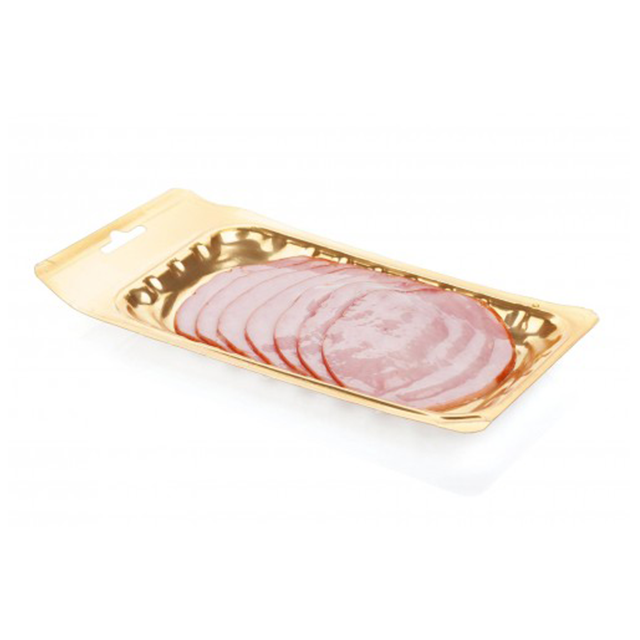
Upgrading packaging systems requires substantial capital. You must understand how modern materials outperform legacy solutions. Traditional vacuum pouches have dominated the industry for decades. However, they introduce several physical and aesthetic limitations.
Visual presentation often suffers in standard vacuum bags. The aggressive mechanical tension compresses the food. This tension distorts soft items like ground meats, soft cheeses, and delicate fish fillets. VSP Skin Film entirely eliminates this mechanical crush. The film drops gently over the food before sealing. It preserves the natural 3D shape and appealing texture.
Liquid purge, commonly known as weep, poses a major retail challenge. Standard pouches leave microscopic wrinkles. These wrinkles allow capillary action. Blood and juices pool visibly around the meat. VSP locks all liquids directly inside the protein matrix. The film adheres completely to the board around the food edges. This improves consumer hygiene perception and actively mitigates bacterial growth.
Retail display versatility also improves dramatically. Standard vacuum packs slide and shift. Retailers must stack them horizontally. VSP holds the product rigid. You can display items vertically on pegboards. This maximizes retail footprint and catches the shopper's eye.
The upfront material costs for VSP run higher than standard vacuum bags. However, businesses justify this investment through reduced food shrinkage. Extended shelf life minimizes retail waste. The premium presentation also grants brands higher retail pricing power.
Chart: Traditional Vacuum Packaging vs. VSP Skin Packaging
Feature | Traditional Vacuum Bags | VSP Skin Packaging |
|---|---|---|
Product Deformation | High risk of crushing soft products. | Zero mechanical tension; preserves 3D shape. |
Liquid Purge (Weep) | Juices pool in bag wrinkles. | Liquids locked in place; zero capillary action. |
Display Orientation | Horizontal stacking only. | Vertical hanging and pegboard compatible. |
Material Expense | Lower initial material outlay. | Higher initial cost, offset by lower retail waste. |
Selecting the right polymer structure prevents catastrophic line failures. You cannot treat all skin films equally. Engineering teams must evaluate specific performance metrics before placing bulk orders.
Shelf life extension depends entirely on oxygen transmission rates (OTR). A high barrier VSP film heavily relies on EVOH (Ethylene Vinyl Alcohol) layers. EVOH acts as an aggressive blocker against oxygen molecules. Manufacturers co-extrude it between layers of PE (Polyethylene) to protect it from moisture. This multi-layer structure is essential for keeping fresh proteins safe from premature spoilage.
However, some applications require highly permeable skin films. These breathable variants feature a high OTR. The FDA mandates breathable packaging for specific fresh and frozen seafood. Some fish carry a risk of Clostridium botulinum (botulism) in anaerobic environments. Permeable films allow oxygen to pass through, keeping the environment safe while still providing a skin-tight presentation.
Film thickness dictates durability during transport. We measure this in microns (μm). A standard food grade VSP film typically ranges from 75μm to 150μm. Smooth products like boneless chicken breasts perform perfectly well at 75μm. Thicker cuts of beef require at least 100μm.
Bone-in applications introduce severe puncture risks. T-bone steaks, rack of lamb, and shell-on seafood will pierce standard polyethylene. For these items, you must upgrade the film formulation. Chemical engineers use specialized ionomer resins, such as Surlyn. These ionomers stretch dramatically around sharp edges without tearing. They ensure the vacuum seal remains intact through the entire cold chain.
The upper web must bond chemically with the lower substrate. You face a critical necessity of matching the film's sealing layer to the bottom tray material. Trays usually consist of PP (Polypropylene), PET (Polyethylene Terephthalate), PVC, or PE-coated cardboard.
If you match a PE-sealing film with a raw PET tray, the polymers repel each other. This mismatch results in weak peel strength or complete seal failure. Always verify the sealant layer chemistry with your packaging supplier.
Strategic packaging upgrades yield immediate returns in specific product categories. High-margin items benefit the most from upgraded aesthetics and extended freshness windows.
Fresh meat skin packaging drives substantial revenue at the retail counter. The total elimination of oxygen prevents lipid oxidation. It stops myoglobin from turning meat brown. Consumers buy with their eyes. A brightly colored, perfectly contoured steak conveys premium quality. It justifies a higher price point per pound.
Ready-made meals also leverage this technology effectively. Pre-cooked convenience foods often utilize microwaveable film variants. During microwave heating, standard pierced lidding dries out the food. VSP acts differently. The film expands upward, creating a self-venting steam dome. It continuously steams the food in its own moisture. This dramatically improves texture and flavor compared to legacy packaging.
Cheese and charcuterie producers utilize VSP to prevent mold growth. Standard Modified Atmosphere Packaging (MAP) relies on gas mixtures. If the gas escapes, mold grows quickly. VSP removes all ambient air. It maintains delicate slice integrity without relying on injected gases.
Transitioning a facility to a skin packaging line presents distinct operational challenges. Operators must adapt to new machine tolerances. Failing to address these risks results in high material scrap rates.
Machine calibration carries the highest risk. VSP requires significantly tighter temperature and vacuum timing tolerances than standard MAP or basic tray sealing. If the heating platen provides uneven heat, you get film webbing. Webbing looks like prominent wrinkles folded over the product. If the vacuum draws too fast, the film can blow tiny holes, compromising the hermetic seal.
The "curling" effect remains a common implementation failure. As the heated film cools, it shrinks slightly. This thermal contraction creates mechanical tension. If you use a thin, flat cardboard backing, the film tension bows the board upward. Mitigation strategies include lowering the film tension during the draping phase or utilizing thicker, more rigid board substrates.
To avoid these pitfalls, follow this vendor shortlisting action plan:
Request comprehensive technical data sheets specifying exact OTR and MVTR (Moisture Vapor Transmission Rate) limits.
Demand strict cross-compatibility testing between the film sealant layer and your exact existing tray substrates.
Run a physical line test to verify peelability. Ensure consumers can easily open the corners while maintaining seal integrity during rough cold-chain transport.
VSP skin film is not a blanket solution for all food packaging needs. However, it represents a highly effective structural upgrade for premium perishables. When extended shelf life and flawless aesthetic display directly drive your revenue, the technology proves invaluable.
Transitioning your production lines requires a holistic view of the packaging ecosystem. Do not buy film based on price alone. You must align your machine heating capabilities, your rigid tray substrates, and your specific product geometries before committing to a commercial specification. Engage with engineers, run physical trials, and secure your product's position as a premium offering on the retail shelf.
A: MAP replaces oxygen with a specific gas mixture like nitrogen or carbon dioxide. This process intentionally leaves a protective gas headspace above the food. VSP, however, removes all ambient air entirely. It uses the flexible film itself to contour tightly to the product, leaving zero headspace in the package.
A: Yes, specific film formulations are engineered explicitly for microwave use. These often feature a self-venting peel mechanism that releases pressure safely. However, standard non-microwaveable films will melt and ruin the food. Always verify thermal tolerances and microwave compatibility with your film manufacturer.
A: Historically, recycling proved difficult due to multi-layer composite structures combining PE and EVOH. However, new mono-material VSP films are rapidly emerging. Manufacturers now produce all-PET or all-PE structures to meet strict compliance standards with modern Extended Producer Responsibility (EPR) recycling regulations.


