
- All
- Product Name
- Product Keyword
- Product Model
- Product Summary
- Product Description
- Multi Field Search
Views: 0 Author: Site Editor Publish Time: 2026-10-19 Origin: Site


Fresh meat processors face a constant battle against two major margin-killers. Premature spoilage and unappealing retail presentation destroy profitability. We often see this presentation failure as purge or drip loss inside the package. While Modified Atmosphere Packaging (MAP) and traditional vacuum bags serve a purpose, they frequently fall short. They struggle to maximize shelf life and structural integrity for premium cuts. Upgrading to the correct vacuum skin packaging film directly influences oxygen transmission and moisture retention. Ultimately, this choice determines your retail profitability. You must evaluate specific technical barrier properties before procurement. This guide breaks down the essential mechanical features you need to understand. You will learn how high-barrier materials work on a structural level. We will explore exactly how to evaluate these materials for your specific meat profiles and operational constraints.
Standard porous wraps allow continuous oxygen ingress. This uncontrolled atmospheric exposure leads to rapid biochemical changes in fresh proteins. Muscle pigments react quickly to oxygen presence. Oxymyoglobin gives fresh beef a bright red color. However, prolonged oxygen exposure forces an oxidation process. The pigment transforms into metmyoglobin. This causes the meat to develop an unappealing brown hue. Consumers consistently reject brown meat at the retail case. Retailers must then discount or discard these expensive products. Implementing a proper vacuum skin packaging film halts this rapid degradation. It controls the gaseous environment and stabilizes the color cycle.
Traditional MAP systems leave ambient space around the meat. Loose vacuum bags often fail to contour tightly to the muscle. This empty space allows moisture to migrate out of the tissue. We call this migration drip loss or purge. Water pools at the bottom of the tray. This liquid degrades consumer trust and looks unsanitary. More importantly, it causes physical weight loss. You lose valuable product yield between the processing plant and the retail shelf. Buyers pay for meat weight, not purged water. Failing to secure this moisture directly harms your bottom line.
You must stop viewing packaging as just a basic container. Instead, frame it as an active preservation tool. Advanced films act as a second skin. They adhere tightly to the entire product surface. This tight adherence locks in natural moisture securely. Simultaneously, it locks out atmospheric degraders like oxygen and airborne bacteria. The package essentially pauses the biological aging process. Retailers gain valuable extra days to sell the product at full price. Processors protect their brand reputation by delivering consistently juicy, appealing cuts.
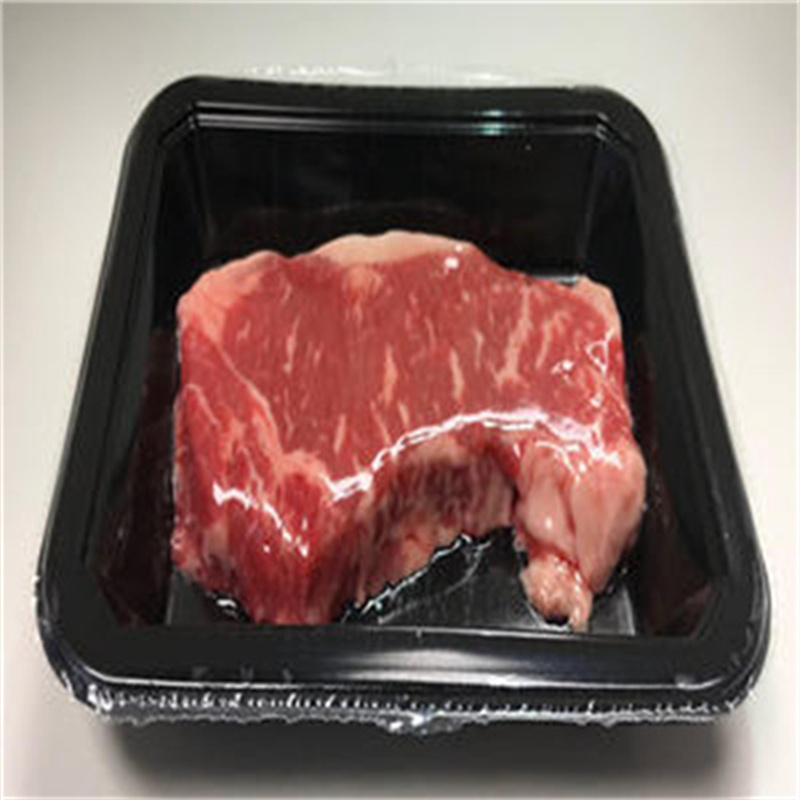
Not all plastic packaging blocks gases effectively. Standard polyethylene breathes. It allows molecules to pass through its microscopic structure. A true high-barrier material utilizes multi-layer co-extrusion technology. Engineers combine different polymer resins into a single microscopic sandwich. The core layer usually contains EVOH (Ethylene Vinyl Alcohol) or PVDC (Polyvinylidene chloride). These specific polymers possess incredibly dense molecular structures. They act as physical walls against gas molecules. This dense core is what qualifies a high-barrier VSP film for demanding meat applications.
Industry professionals measure gas permeability using the Oxygen Transmission Rate (OTR). OTR dictates how much oxygen passes through a specific square area over 24 hours. Fresh red meat requires extremely strict OTR management. Near-zero oxygen environments successfully stall the growth of aerobic spoilage bacteria. This suppression extends the microbiological safety window significantly. You must manage this environment properly to avoid unwanted color degradation.
Table: Standard OTR Guidelines for Meat Packaging Materials
| Material Type | Typical OTR Range (cc/m²/day) | Suitability for Fresh Meat |
|---|---|---|
| Standard PVC Overwrap | 5000 - 10000+ | Poor (2-3 days shelf life) |
| Standard Polyethylene | 3000 - 5000 | Inadequate for long-term storage |
| EVOH Co-extruded VSP | Less than 10 | Excellent (Maximum preservation) |
While OTR manages gases, Water Vapor Transmission Rate (WVTR) controls moisture movement. A low WVTR keeps internal water locked inside the muscle tissue. This retention prevents the meat from drying out during prolonged refrigeration. If you freeze the meat later, low WVTR becomes even more critical. It prevents moisture from sublimating into the freezer environment. This directly prevents freezer burn. The meat maintains its intended juiciness, texture, and flavor profile until cooking.
The physical mechanics of stretching film over complex shapes require advanced engineering. Meat cuts are not perfectly flat blocks. They feature varying heights, sharp angles, and irregular topologies. Formability allows the heated polymer to contour perfectly around these complex profiles. It must do so without thinning out dangerously at the corners. Polymer memory refers to the material's structural stability. Once sealed, inferior materials might snap back or loosen. High-quality materials maintain their tight contour indefinitely. They hold the meat firmly in place even when displayed vertically.
Different proteins require customized barrier strategies. Beef and lamb demand strict oxygen barriers. You must manage their delicate color cycles carefully. Any oxygen leakage will trigger rapid browning. Poultry presents a completely different biological challenge. Chicken and turkey have much higher moisture contents. They spoil primarily through aggressive bacterial proliferation. Therefore, poultry packaging demands intense microbial control. You need an absolutely leak-proof seal. The material must handle high liquid volumes during the vacuum process without failing.
You cannot use a one-size-fits-all approach for thickness and puncture resistance. Bone structures dictate your material selection heavily. Here are the common industry approaches:
Consumers buy fresh meat with their eyes first. If the package looks cloudy, they will assume the meat is old. Optical clarity profoundly impacts purchase intent. You need materials that offer high gloss and absolute transparency. Manufacturers have developed co-extrusion methods to hide the dense EVOH layers inside crystal-clear outer skins. You get the robust protection of high barriers without sacrificing visual appeal. The product looks fresh, vibrant, and premium under bright retail lights.
The best top film in the world fails if it cannot bond to the bottom tray. This bonding happens at the sealant layer. You must match the sealing chemistry of the top web exactly to your tray material. Common tray substrates include CPET, APET, PP, and lined paperboard. If you mismatch these polymers, the heat seal will fail. You will produce "leakers." Air will enter, juices will escape, and spoilage will accelerate. Always verify polymer compatibility before running large production batches.
Introducing new materials into existing packaging equipment requires careful calibration. You must understand your machine's capabilities.
Rollout issues will happen. You must prepare your maintenance team for realistic challenges. Web curling occurs when tension is unbalanced on the supply roll. It causes feeding jams. Uneven heating leads to weak spots in the final package. The most common issue is seal contamination. Meat juices or marinades can splash onto the tray flange during loading. If liquid blocks the polymer bonding area, the heat seal cannot fuse. You must ensure clean flanges before the tray enters the sealing chamber.
Upgrading your packaging chemistry directly impacts your financial metrics. When you extend shelf life by several days, retail shrink plummets. Retailers throw away less spoiled product. They execute fewer markdowns on aging inventory. This reduction in food waste translates into immediate, measurable profit margins. Processors who adopt advanced vacuum skin packaging film often secure better retail contracts. Supermarkets prefer suppliers who consistently deliver longer-lasting, visually appealing products.
This packaging format offers massive logistical advantages over traditional MAP systems. MAP trays require a high "headspace" of protective gas. This empty air takes up valuable space inside transport boxes. VSP eliminates this headspace entirely. The package profile perfectly matches the meat's physical dimensions. This smaller dimensional footprint allows for much higher case-pack density. You can fit significantly more product onto a single pallet. This density slashes your transportation costs. You need fewer trucks to move the same volume of meat.
Modern consumers and corporate boards demand stronger environmental accountability. This packaging supports corporate ESG (Environmental, Social, and Governance) targets heavily. Preventing food waste remains one of the most effective ways to reduce carbon emissions. Furthermore, the industry is shifting toward thinner, high-performance mono-materials. These advanced webs deliver the same protection using less total plastic by volume. Some newer variations even offer improved recyclability profiles when matched with identical tray substrates.
Specifying the correct vacuum skin packaging film requires strategic calculation. You must carefully balance OTR and WVTR metrics against physical durability requirements. Furthermore, you must ensure absolute tray compatibility. Getting this formula right transforms your packaging from a simple cost center into a profitability engine. It prevents drip loss, preserves color, and minimizes retail shrink.
Your next steps should focus on technical validation. Do not buy blindly based on price alone. You must request technical data sheets (TDS) for any prospective material. Review the EVOH content and puncture resistance ratings. Always conduct small-batch machine trials using your specific meat cuts and trays before full-scale procurement.
Take action to protect your product margins. Consult with a packaging engineer today. Request physical material samples and run barrier efficacy tests on your most challenging bone-in or high-moisture proteins.
A: Standard options use basic polyethylene. They provide minimal gas protection. High-barrier materials feature co-extruded layers containing EVOH or PVDC. These specialized core layers drastically reduce the Oxygen Transmission Rate (OTR). This blocks oxygen from entering the package, significantly extending the shelf life of fresh proteins.
A: Yes, initially. The oxygen-free environment causes the meat's pigment to shift to deoxymyoglobin. This creates a darker, purplish hue. This is completely natural and safe. Once the consumer opens the package and exposes the meat to oxygen, it quickly "blooms" back to its familiar bright red color.
A: Yes. Bone-in cuts require specialized, high-puncture variants. These films are usually thicker (150+ microns) and utilize ionomer resins, such as Surlyn. These advanced polymers stretch securely over sharp bones without breaking or losing vacuum integrity.
A: VSP generally outperforms MAP in shelf life and volume efficiency. MAP uses ambient gas that can leak, and the bulky trays waste shipping space. VSP locks out oxygen completely, stalls microbial growth longer, and drastically reduces shipping volume by eliminating package headspace.


