
- All
- Product Name
- Product Keyword
- Product Model
- Product Summary
- Product Description
- Multi Field Search
Views: 0 Author: Site Editor Publish Time: 2026-10-30 Origin: Site


Selecting the right High Barrier Film represents a critical balancing act for food manufacturers. You must extend shelf life while protecting brand integrity. You also need to tightly control material expenses. Over-engineering your packaging structure inevitably leads to inflated unit costs. Conversely, under-engineering results in premature spoilage, loss of customer trust, and expensive product recalls.
We designed this guide to provide a systematic framework for buyers. You will learn how to properly evaluate complex material architectures. We will explore how to analyze crucial performance metrics. You will also understand how to ensure strict machine compatibility on your existing lines. By grasping these core elements, you can make an evidence-based procurement decision. Read on to discover exactly how to navigate transmission rates, structural vulnerabilities, and operational realities.
Performance vs. Application: Selection must be anchored in specific OTR (Oxygen Transmission Rate) and WVTR (Water Vapor Transmission Rate) requirements dictated by the food product's chemical makeup.
Material Complexity: Modern applications rely heavily on multi layer barrier film architectures, utilizing materials like EVOH to achieve precise protective properties.
Operational Reality: The best barrier on paper fails if it lacks machinability. Seal initiation temperatures, slip properties, and gauge must align with your existing packaging lines.
Vetting is Critical: Require comprehensive Technical Data Sheets (TDS) and mandate pilot runs before committing to commercial-scale production.
You cannot select the proper material without defining exact performance parameters. A generic request for high barrier food packaging film often leads to mismatched solutions. Success requires mapping your food’s unique degradation risks against precise transmission rates.
Every food product degrades differently. You must map your desired shelf life against these specific spoilage factors. Identify the primary enemy of your product.
Lipid Oxidation: Snacks and fried foods contain high fat levels. Oxygen exposure turns these fats rancid quickly. You need aggressive oxygen exclusion here.
Moisture Loss or Gain: Fresh produce wilts when it loses internal moisture. Crackers become soggy when they absorb environmental humidity. Target moisture control based on the product state.
Microbial Growth: Fresh meats and dairy face rapid bacterial proliferation. These require a specialized atmosphere to halt aerobic bacteria growth.
Once you identify the degradation factors, translate them into quantifiable metrics. Suppliers need hard numbers to engineer your film.
First, evaluate the OTR (Oxygen Transmission Rate). Determine the exact cc/m²/day your product can tolerate. A highly sensitive product like fresh beef might require an OTR below 1.0. A less sensitive baked good might survive perfectly with an OTR of 10.0.
Next, determine the WVTR (Water Vapor Transmission Rate). Often called MVTR, this measures the g/m²/day of moisture transfer. Precise WVTR specifications prevent cheese from dehydrating and keep powdered mixes from clumping.
Barrier properties mean nothing if the package breaks during transit. You must identify necessary secondary physical properties early in the process.
Puncture resistance is crucial for bone-in meats or sharp, rigid snacks. These products easily pierce weak films, instantly destroying the internal barrier. Flex-crack resistance matters heavily for liquid pouches or frozen foods undergoing temperature stress. Finally, consider optical clarity. Retail appeal relies on high gloss and low haze to showcase the food inside.
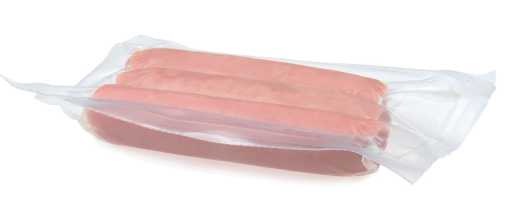
Single substrates cannot provide comprehensive protection. A single polymer might block moisture perfectly but let oxygen pour through. This inherent limitation drives the industry toward complex composite structures.
Single-substrate films rarely meet high barrier requirements. Polyethylene blocks water well but fails against oxygen. Nylon offers toughness but struggles with humidity. Therefore, co-extruded or laminated structures remain the industry standard.
A multi layer barrier film combines different polymers to leverage their individual strengths. Manufacturers bond these layers together. This creates a unified web capable of blocking moisture, oxygen, and physical damage simultaneously.
Ethylene Vinyl Alcohol (EVOH) stands out as a premier barrier material. It dominates modern food packaging for several reasons, but it also carries distinct vulnerabilities.
The primary strength of an EVOH barrier film lies in its unmatched oxygen resistance. It blocks oxygen exponentially better than standard polymers. It also excels at preserving delicate aromas and locking in intended flavors.
However, EVOH has a severe vulnerability. It is highly sensitive to moisture. When EVOH absorbs water, its polymer chains relax. This relaxation rapidly degrades its oxygen barrier capability.
To overcome this, engineers use a specific structural solution. They strategically sandwich the EVOH layer between hydrophobic polyolefins. Materials like Polyethylene (PE) or Polypropylene (PP) act as shields. They protect the delicate EVOH core from external humidity and internal product moisture.
While EVOH remains popular, other materials suit specific applications. You should briefly evaluate alternative barrier coatings based on cost, clarity, and specific needs.
PVdC: Offers excellent moisture and oxygen barriers. However, environmental concerns regarding chlorine limit its modern use in some regions.
AlOx/SiOx Coatings: Provide high transparency and great barriers. They are ideal for microwavable packaging but can be prone to flex-cracking.
Metallized Films: Deliver exceptional protection against light, oxygen, and moisture. They remain cost-effective but completely eliminate product visibility.
Material Type | Oxygen Barrier | Moisture Barrier | Clarity | Flex-Crack Resistance |
|---|---|---|---|---|
EVOH (Protected) | Excellent | Poor (needs PE/PP) | High | Moderate |
PVdC | Very Good | Very Good | High | Good |
Metallized PET | Excellent | Excellent | Zero (Opaque) | Moderate |
AlOx Coating | Good | Good | High | Low (Brittle) |
A flawless barrier specification means little if the film jams your machinery. You must align your material choice directly with your specific packaging equipment.
Thermoforming demands intense physical performance from packaging materials. You stretch the film into a mold using heat and pressure. This process places immense stress on the polymer chains.
A high barrier thermoforming film requires excellent formability. It must handle deep draw capabilities without rupturing. Memory retention is also crucial to ensure the package holds its shape after cooling.
You must address the risk of barrier thinning. When the film stretches into deep tray corners, the material thins out significantly. A 100-micron film might become 20 microns in the corner. If the barrier layer becomes too thin, oxygen permeates easily. You must specify optimal gauge distribution to guarantee the thinnest corner still meets your target OTR.
Vertical and Horizontal Form-Fill-Seal (VFFS/HFFS) machines operate at blistering speeds. Your film must keep up without compromising seal integrity.
You must evaluate requirements for the seal initiation temperature (SIT). A lower SIT allows your machine to run faster. Hot tack strength is equally important. The seal must hold firm immediately after heating while the food drops into the pouch.
Additionally, assess the Coefficient of Friction (COF). COF dictates how slippery the film feels. Incorrect slip levels cause major automated line issues. Too much friction causes web jamming. Too little friction creates tracking and alignment failures.
Packaging formats dictate fundamentally different sealing mechanisms. You cannot interchange these films without causing consumer frustration or product failure.
Lidding films require specific structural differences to achieve peelable seals. Consumers expect to open a yogurt cup smoothly without tearing the film. Flow wraps require destructive seals. You want the ends of a snack bar wrapper to tear rather than peel cleanly. Engineers formulate the sealant layers differently for each application.
Procurement teams must balance technical specifications against operational and environmental realities. Understanding these trade-offs prevents wasteful spending and costly production errors.
You need a framework for avoiding over-specification. Brands often pay a premium for barrier levels they do not actually need. Analyze your true supply chain timeline before over-investing.
Do not pay for a sub-1.0 OTR EVOH structure if a moderate barrier achieves your goals. If your snack naturally sells out within three months, a 12-month shelf-life film wastes money. A standard metallized film might perfectly achieve the necessary 6-month shelf life at a fraction of the cost.
The packaging industry faces an inherent environmental conflict. Traditional multi layer structures provide incredible food protection. However, they remain notoriously difficult to recycle. Recycling facilities struggle to separate the mixed polymers efficiently.
You must examine emerging solutions carefully. Assess the viability of mono-material barrier structures. For example, Machine Direction Oriented Polyethylene (MDO-PE) combined with barrier coatings shows promise. These are recycle-ready. However, you must recognize their current limitations. Mono-materials still struggle to match the extreme high-barrier performance of traditional EVOH architectures for highly sensitive foods.
New film rollouts frequently fail on the production floor despite perfect lab results. You must anticipate common transition failures to protect your production schedule.
Seal leaks represent the most common rollout failure. Thicker barrier laminations require more heat transfer time. If operators use inadequate sealing jaw pressure or short dwell times, the inner sealant layer will not melt properly. This creates microscopic channels where oxygen enters and destroys the food. Always plan for machine recalibration when upgrading barrier levels.
Finding a reliable manufacturer matters just as much as engineering the material. You need partners who provide transparent data, consistent quality, and robust technical support.
Never rely on verbal assurances regarding film performance. You must insist on comprehensive and standardized documentation from potential suppliers.
Demand detailed Technical Data Sheets (TDS) outlining specific OTR, WVTR, gauge, and SIT values. Request Material Safety Data Sheets (MSDS) to understand handling requirements. Most importantly, require certificates of analysis for every production lot. This ensures the batch you receive matches the prototype you tested.
Food contact packaging carries strict regulatory burdens. Your supplier must prove their materials meet stringent consumer safety standards.
Ensure explicit documentation for FDA direct food contact compliance. Verify their GFSI certifications, such as SQF or BRC. These facility certifications prove they maintain sanitary manufacturing environments. Finally, review relevant migration testing results. This proves that harmful chemicals will not leach from the plastic into your food products.
Paper specifications only tell half the story. The film must perform reliably on your unique factory floor machinery.
Require supplier willingness to provide roll stock exclusively for pilot testing. Do not commit to bulk orders based on lab samples. Furthermore, evaluate their technical support during these machine trials. A strong supplier sends engineers to help you optimize heat, dwell, and pressure settings on your packaging lines.
A supplier’s operational stability directly impacts your production schedule. Disruptions in film delivery shut down entire food processing plants.
Assess the supplier's manufacturing footprint. Domestic production often guarantees shorter lead times. International sourcing might lower costs but increases transit risks. Evaluate their capacity to handle volume surges. If your product goes viral, you need a partner who can scale production rapidly without compromising barrier quality.
Evaluation Category | Critical Checks | Red Flags to Avoid |
|---|---|---|
Documentation | TDS, MSDS, Lot Certificates | Vague "estimated" transmission values |
Safety Compliance | FDA approval, GFSI (SQF/BRC) | Missing migration test reports |
Technical Support | On-site line trial assistance | Refusal to provide pilot roll stock |
Supply Resiliency | Transparent lead times, backup capacity | Single-facility manufacturing footprint |
Selecting the optimal barrier material requires deliberate cross-functional alignment. Packaging engineering, marketing, and procurement teams must collaborate closely. Engineering dictates the necessary performance parameters. Marketing defines the visual and tactile consumer experience. Procurement ensures the chosen material aligns with budget constraints.
You must translate your exact shelf-life targets and processing data into a strict Request for Quote (RFQ) specification. Avoid relying entirely on generic vendor recommendations. Tailor the RFQ to address your unique lipid oxidation risks, moisture tolerances, and VFFS machine speeds.
Take action today by mapping your product chemistries. Reach out to qualified suppliers for material samples. Request a comprehensive packaging audit to match your specific food degradation risks with optimal co-extruded film structures. Proactive evaluation secures your brand integrity and prevents costly downstream failures.
A: The difference lies in specific OTR and WVTR thresholds. Standard films use simple polymers like PE or PP, allowing moderate oxygen and moisture transfer. High barrier films integrate specialized resins like EVOH, PVdC, or foil layers. These specialized layers aggressively block gasses, extending shelf life from days to several months for sensitive foods.
A: EVOH performs poorly on its own in high humidity. It is highly moisture-sensitive; water absorption causes its polymer chains to relax, destroying its oxygen-blocking capabilities. To solve this, manufacturers sandwich the EVOH layer between protective outer layers of hydrophobic materials like PE or PP to shield it from moisture.
A: Traditional multi-layer laminations are extremely difficult to recycle because they contain mixed, incompatible polymers. Standard recycling facilities cannot separate them easily. However, the industry is shifting toward recycle-ready mono-materials, such as MDO-PE with specialized barrier coatings, though these still lag slightly behind traditional structures in absolute barrier performance.
A: Required gauge depends heavily on your draw depth, product weight, and necessary puncture resistance. When film stretches into a mold, it thins out in the corners. You must calculate this corner-thinning ratio carefully to ensure the final drawn thickness still contains enough barrier material to meet your OTR requirements.


