
- All
- Product Name
- Product Keyword
- Product Model
- Product Summary
- Product Description
- Multi Field Search
Views: 0 Author: Site Editor Publish Time: 2026-10-02 Origin: Site


Mismatched packaging materials and equipment quietly drain your operational efficiency every day. We often see production line operators struggle to maintain output speeds. They face these struggles because their sealing machines cannot process modern polymers correctly. Weak seals, frequent wire replacements, and unexpected production bottlenecks frequently emerge in these rigid environments. Polyolefin (POF) serves as the industry standard for safe, high-clarity shrink packaging. However, its performance relies entirely on specific sealing equipment configurations. We created this comprehensive guide to provide operations and procurement managers with a highly practical, evidence-based evaluation framework. You will learn exactly how to match your machinery parameters to advanced material requirements. This knowledge helps you minimize implementation risks immediately. It also empowers you to secure reliable, airtight packaging for every product batch.
Thermal dynamics differ vastly between modern polymers and legacy packaging materials. Polyolefin reacts to applied heat much faster than traditional PVC. It requires a highly consistent, narrow temperature window to achieve strong hermetic seals. If jaw temperatures fluctuate, operators immediately face frequent burn-throughs. They may also encounter weak joints pulling apart during transit. You must maintain thermal stability to avoid these defects.
Mechanical alignment matters immensely for operational success. Right-angle cutting machines depend on specific material geometries to enclose products efficiently. They strictly require a centerfold configuration. The material arrives already folded in half on the supply roll. You simply insert the product between the top and bottom layers. The machine then cuts and fuses the open edges simultaneously. This single motion boosts throughput significantly.
Film thickness directly dictates the necessary heat exposure duration. Heavier gauges demand longer jaw contact times. They need this extra time to fuse the multiple layers completely. Lighter gauges melt quickly. Applying too much dwell time to thin films creates messy, stringy edges. We rely on strict gauge-to-time ratios to standardize production setups.
Table: POF Film Gauge vs. Relative Dwell Time Recommendations
| Film Gauge | Thickness (Microns) | Relative Dwell Time | Common Application |
|---|---|---|---|
| 45 Gauge | 11.4 | Very Short | Lightweight retail goods, cosmetics |
| 60 Gauge | 15.2 | Short | Baked goods, small printed materials |
| 75 Gauge | 19.0 | Medium | Software boxes, standard consumer items |
| 100 Gauge | 25.4 | Long | Heavy hardware, multi-pack items |
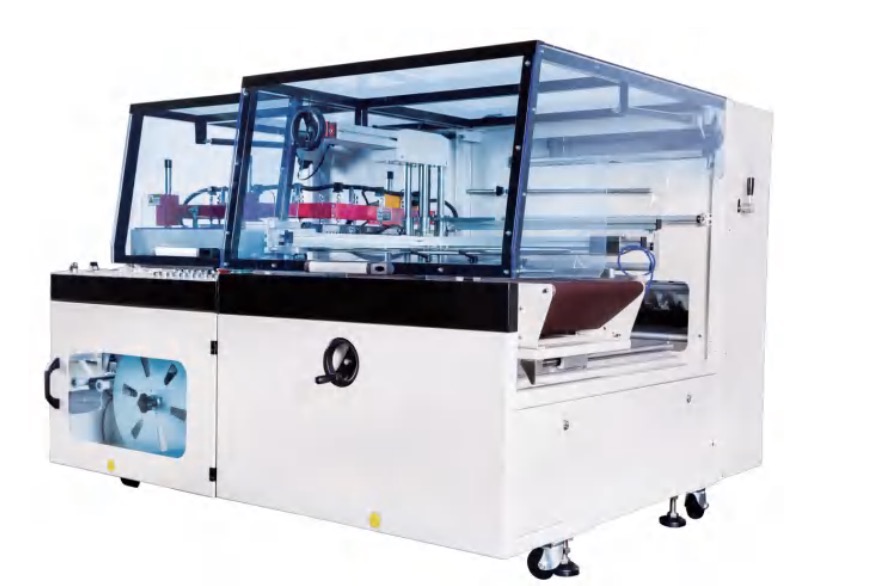
You must evaluate different cutting elements based on your expected volume. Round hot wires offer basic functionality for low-volume runs. However, they struggle with continuous heavy use. Flat ribbon wires distribute heat more broadly across the material. Teflon-coated micro-knives deliver the absolute highest performance in industrial settings. They slice through polymers cleanly without melting excess material. Establishing true POF shrink film sealer compatibility usually demands these advanced micro-knives. They actively mitigate sticky polymer residue buildup during long shifts.
Digital proportional-integral-derivative (PID) controllers vastly outperform basic analog dials. PID controllers constantly monitor and adjust the jaw temperature. They maintain the exact thermal window required by sensitive polymers. Analog systems often drift over time. This slow drift causes inconsistent cuts across a single batch.
Jaw pressure plays an equally crucial role in package integrity. The upper and lower jaws must meet evenly across their entire length. If the silicone base pad wears out unevenly, pressure drops in specific spots. Uneven pressure creates "angel hair." These thin strings of melted plastic compromise package security. They also look highly unprofessional on retail shelves.
The cutting jaw only completes the first step of the process. Next, the conveyor hands the newly enclosed product to the shrink tunnel. Tunnel airflow impacts the final shrink rate dramatically. You need balanced convection to evacuate air evenly from the package. If the handoff causes the product to bounce, the fresh seams might rupture. We recommend matching conveyor speeds exactly to prevent sudden jerks.
Direct food contact demands strict adherence to rigorous safety protocols. The FDA regulates materials touching consumables. Your chosen L-bar sealer must process approved materials perfectly. It must cut the film cleanly without generating noxious toxic fumes. It must never leave tiny particulate residue on the food safe seal. Even microscopic contamination violates strict compliance standards.
Visual optics drive product success in retail display environments. Optimal machine settings prevent "dog ears" from forming at the corners. Dog ears occur when excess plastic fails to shrink flat. They interfere with barcode scanning and look sloppy. Properly calibrated equipment ensures high-clarity, high-gloss presentations. Consumers intuitively equate clean, tight packaging with superior product quality.
Speed expectations change your machinery requirements entirely. Manual systems work quite well for boutique or low-volume operations. Semi-automatic models handle moderate volumes but rely heavily on operator consistency. Fully automatic systems demand the absolute highest level of component matching. They run at extreme speeds. At 40 packs per minute, even minor thermal deviations cause massive scrap piles.
Even the most advanced setups occasionally encounter friction during implementation. We can solve these issues by examining the mechanical root causes directly.
You must start by thoroughly auditing your current machinery. Determine immediately if your existing equipment has the necessary thermal precision. Check the exact wire type installed on the jaw. Verify if the silicone pads remain flat and resilient. You must confirm these details before transitioning to advanced polymers.
Next, implement a strict pilot test framework. Never bulk-purchase materials without testing them first. Follow these sequential validation steps carefully:
Finally, lean heavily on supplier support during this phase. Select supply partners who actively offer deep technical consultation. They should help you calibrate your machine proactively. Avoid transactional commodity sellers who vanish after delivering the pallets. Expert technical support solves calibration issues in minutes rather than days.
Polyolefin and right-angle cutting machines form a highly effective production combination. However, you must align thermal settings, wire types, and material gauges perfectly. Proper alignment prevents unexpected production delays and eliminates unsightly packaging defects completely. Taking a structured, evidence-based approach to machinery audits actively protects your production line integrity.
We encourage you to test these parameters on your own floor. Request a material sample roll today to begin your pilot test. Schedule a detailed compatibility consultation with our technical sales team. They will gladly help you validate your specific machinery setup and optimize your daily output.
A: Yes, but you must thoroughly clean the seal wire first. You also need to replace the Teflon tape completely. Recalibrate your temperature settings carefully, as these materials have completely different melt points. PVC runs much cooler. Adjusting for polyolefin requires immediate testing to avoid burning.
A: We generally recommend 60 to 75 gauge for manual operations. Thicker films require more constant, uniform pressure than a manual operator can reliably provide over a long shift. Lighter gauges fuse quickly. They reduce operator fatigue while maintaining excellent package security.
A: This common issue usually indicates the sealing wire is not hot enough. It also happens if the operator opens the jaw too quickly before the cut completes. Worn-out cutting surfaces or damaged Teflon tape frequently cause these tiny melted strings.
A: Standard sealers usually feature built-in film separators. However, you must ensure the unwinding rack perfectly aligns with the material width. Proper alignment prevents uneven feeding. Uneven feeding otherwise leads to skewed cuts and wasted material on every cycle.


