- All
- Product Name
- Product Keyword
- Product Model
- Product Summary
- Product Description
- Multi Field Search
Views: 0 Author: Site Editor Publish Time: 2026-01-20 Origin: Site


In everyday kitchens and homes, cling film and Saran wrap are two of the most commonly used products for food preservation. Whether wrapping up leftovers, sealing sandwiches, or covering bowls, these two products seem similar in their function and appearance, but many people are often unsure about what sets them apart. Are they the same thing, or are there subtle differences that could affect your food storage needs?
In this article, we will explore the distinctions between cling film and Saran wrap, their compositions, uses, advantages, and how each can be best utilized in both household and commercial environments. By understanding these differences, you will be better equipped to choose the right option for your specific requirements. Additionally, we’ll touch on the broader applications of these plastic films, helping you make more informed choices when it comes to wrapping and preserving food.
At Nanjing Jinhuigu Industrial Co., Ltd., we specialize in high-quality food wrapping solutions. Whether you are looking for cling film, or other packaging materials, our products are designed to ensure food stays fresh, safe, and secure.
PVC (Polyvinyl Chloride) is a widely used material in packaging applications and offers a well-balanced combination of practical properties, especially for cling film and basic wrapping uses. First, PVC provides excellent transparency, allowing users to clearly see the appearance and condition of the wrapped contents, which makes it easier to identify, organize, and manage food, raw materials, or other stored items. In addition, PVC has good puncture resistance, making it suitable for wrapping products with hard edges, irregular shapes, or slightly sharp surfaces without tearing easily. This helps improve package integrity and overall handling reliability. PVC can also offer a cost-effective solution in certain applications, particularly in commercial environments where high-volume use and packaging efficiency are important. Because of these advantages, PVC is widely used in food wrapping, temporary product protection, storage classification packaging, and some everyday industrial packaging applications. Overall, it is a practical material that combines visibility, durability, and economic value.
The primary difference between cling film and Saran wrap lies in their materials and composition. Both products are designed to adhere to surfaces and preserve food, but the materials used in their production greatly impact their strength, stretchability, durability, and overall performance. Understanding these differences can help you make an informed choice when selecting the right wrap for food storage, especially considering factors like the duration of storage, food type, and moisture control.
Cling Film:
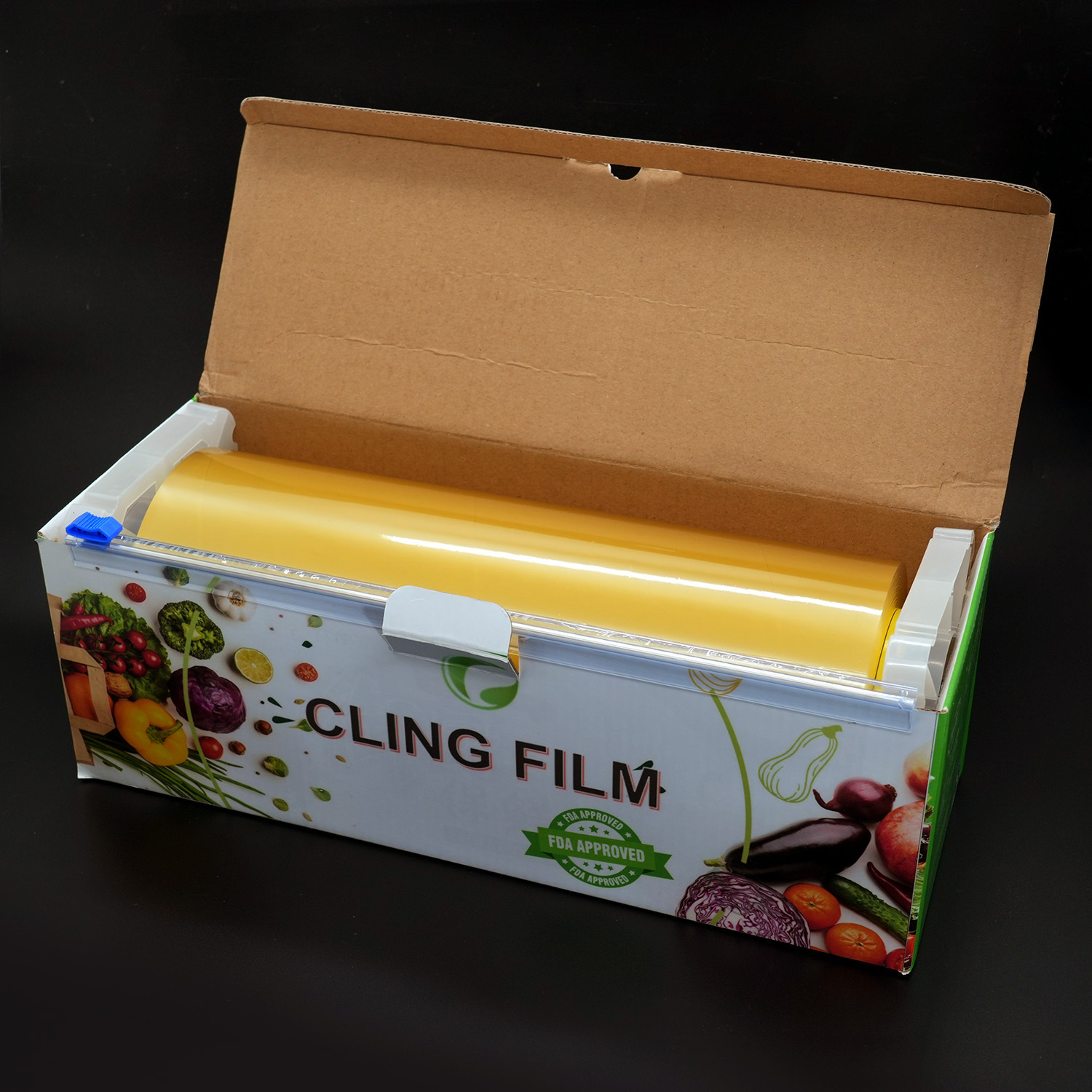
Cling film, also known as plastic wrap, is commonly made from two primary materials: Polyethylene (PE) ,Polyvinyl Chloride(PVC)and Polyvinylidene Chloride (PVDC). The choice of material affects its usage and suitability for various food storage needs.
Key Properties of Cling Film (PE):
Stretchability: PE cling film is highly stretchable, allowing it to mold around the shape of the food or container. This ensures a snug, tight fit, providing adequate protection.
Food-Safe: PE is non-toxic, making it safe for direct contact with food. This makes it an ideal choice for household and commercial food storage.
Moisture-Resistant: PE cling film provides a basic barrier against moisture, which helps to preserve the freshness of food for short-term storage. However, it isn’t as effective at providing an airtight seal compared to other wraps, such as Saran wrap, making it less suitable for long-term storage.
Best Uses: PE cling film is best suited for short-term food storage, such as wrapping sandwiches, storing fruits, or covering leftovers. It provides enough protection for items that will be consumed within a few days but doesn’t offer the extended preservation properties needed for long-term storage.
Polyvinylidene Chloride (PVDC):
While less commonly used than PE, PVDC is a material that is known for its superior cling properties. Cling film made from PVDC creates a firmer seal than PE-based films, making it a better choice for more robust food preservation.
Saran Wrap: Made from PVDC
Strong Cling: The PVDC formulation in Saran wrap gives it exceptional cling, ensuring that it adheres tightly to surfaces and maintains a secure seal around food. This provides superior protection compared to standard cling film, making it ideal for keeping food fresh for longer periods.
Excellent Moisture Barrier: One of the main advantages of Saran wrap is its ability to create an excellent moisture barrier. It is specifically designed to prevent air and moisture from reaching the food, which helps to reduce oxidation and spoilage. This makes Saran wrap ideal for long-term food preservation, particularly for items like meats, cheeses, and fresh fruits that are more susceptible to dehydration, oxidation, or freezer burn.
Durability: Saran wrap is more durable than regular cling film, and it is less prone to tearing when stretched or pulled. This makes it a better option for wrapping larger or heavier items, such as large cuts of meat or food that will be stored in the freezer. Its strength allows it to hold up under more demanding storage conditions.
Both products have excellent cling properties, but the performance of Saran wrap is often considered superior when it comes to forming a tight seal. This is because Saran wrap creates an almost hermetic seal that prevents air and moisture from entering, which helps to maintain food freshness for longer periods.
In contrast, cling film is slightly less effective in maintaining an airtight seal. While it sticks well to most surfaces, it doesn’t always provide the same level of barrier protection, which means that food stored in cling film might not stay as fresh for as long as food wrapped in Saran wrap.
Comparison Table: Cling Film vs. Saran Wrap
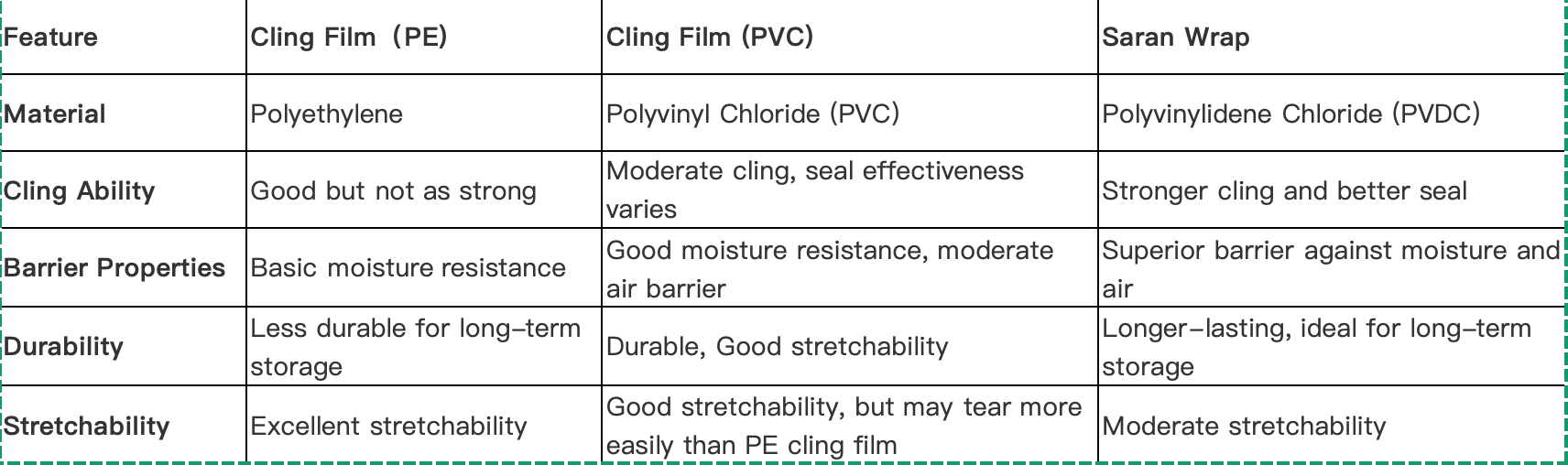
Both cling film and Saran wrap are used primarily for food preservation. However, due to the better moisture resistance and airtight seal of Saran wrap, it tends to be the preferred choice for products that need to stay fresh longer, such as raw meats, cheeses, or fruits that may easily spoil.
Cling Film:
Best for short-term food storage and covering dry food items.
Ideal for wrapping fresh produce, sandwiches, or baked goods that will be consumed soon.
Can also be used for general storage purposes in non-food-related environments.
Saran Wrap:
Superior for long-term storage, especially when keeping food moisture-free and sealed.
Used for raw meats, cheese, or anything that requires an airtight seal to extend freshness.
Popular for wrapping leftovers, particularly in homes or restaurants, where freshness needs to be maintained.
| Both cling film and Saran wrap are single-use plastic products, raising concerns about their environmental impact. While both are technically recyclable, Saran wrap is less commonly recycled due to the chemical properties of PVDC, which make it harder to process in recycling facilities. Cling film, made from polyethylene, is generally easier to recycle, but still faces challenges in widespread recycling initiatives. Many brands are exploring more eco-friendly alternatives to traditional plastic wraps, such as biodegradable or compostable films that can reduce the environmental footprint. As consumer demand for sustainable packaging grows, it’s important to check for products that offer environmentally friendly alternatives or recyclable packaging to help minimize waste. |
While Saran wrap typically offers better moisture resistance and cling properties, it can be more expensive than regular cling film. The decision between the two should be based on your specific needs:
If you're looking for long-term food storage and need an airtight seal, Saran wrap may be worth the extra investment.
If you need something for short-term storage or basic food covering, cling film may provide sufficient functionality at a lower cost.
In terms of ease of use, both cling film and Saran wrap are relatively similar. However, the stronger cling of Saran wrap often makes it easier to work with, especially when trying to create a secure seal.
If you’re using these wraps for a large volume of food, such as in a commercial kitchen, Saran wrap may provide greater convenience, while cling film remains an excellent option for more casual use.
When deciding between cling film and Saran wrap, it’s important to weigh your priorities: cost, food storage needs, and environmental impact. Saran wrap offers superior moisture resistance, airtight seals, and longer-lasting freshness, making it ideal for long-term storage and certain food types. On the other hand, cling film is a more affordable option that performs well for short-term storage and covering dry foods.
For those looking to optimize their food storage and packaging solutions, Nanjing Jinhuigu Industrial Co., Ltd. provides high-quality cling film options to suit both home and business needs. Contact us today to explore our range of reliable food packaging solutions that will help keep your food fresh and safe.
The key difference is that Saran wrap offers superior moisture resistance and creates a stronger seal, making it ideal for long-term storage, while cling film is more affordable and suitable for short-term use.
Saran wrap is generally better for food storage as it provides a more airtight seal, which helps preserve freshness for longer periods, especially for moisture-sensitive items.
Yes, cling film is typically made from polyethylene, which is recyclable, but it may not always be accepted in local recycling programs. Always check with your local recycling facilities.
Saran wrap is particularly effective for storing raw meats, cheese, and fruits, where keeping moisture and air out is essential to maintaining freshness.